


Published on: June 26, 2026
By: BTNI
Location: Rajnandgaon, India
In view of the possible impact of El Niño during the 2026 kharif season, the Krishi Vigyan Kendra Rajnandgaon has issued a comprehensive advisory urging farmers to adopt climate-resilient agricultural practices to minimize crop losses.
Senior Scientist and Head of the centre, Dr. Gunjan Jha, explained that El Niño is a global climatic phenomenon in which sea surface temperatures in the central and eastern Pacific Ocean rise above normal levels. This often weakens the Indian monsoon, leading to deficient or uneven rainfall and increasing the risk of drought-like conditions in several regions.
Considering these possibilities, Indira Gandhi Krishi Vishwavidyalaya has prepared a special contingency plan and agricultural advisory for the 2026 kharif season. The recommendations focus on tackling delayed monsoon onset, below-normal rainfall, and prolonged dry spells through scientific farming techniques.

Key Recommendations for Farmers
Farmers have been advised to:
- Prefer short- and medium-duration crop varieties.
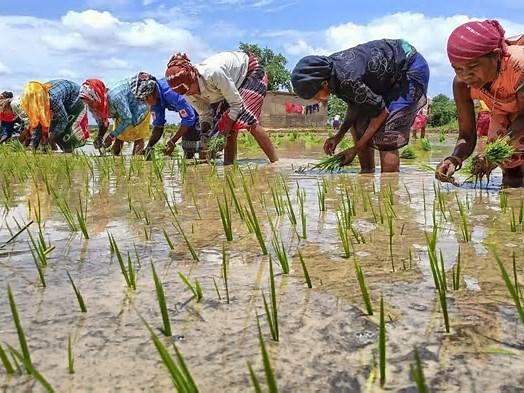
- Opt for Direct Seeded Rice (DSR) instead of the traditional paddy transplanting method.
- Strengthen field bunds to conserve rainwater effectively.
- In upland areas, cultivate alternative crops such as pigeon pea, green gram, black gram, groundnut, sesame, niger, and soybean instead of paddy.
- Diversify crops to reduce climate-related risks.
- Treat seeds before sowing with Carbendazim along with Thiamethoxam or Imidacloprid.
- Use Azospirillum in paddy, Azotobacter for other crops, and Rhizobium biofertilizers for pulses.
- Apply recommended pre-emergence herbicides within three to five days after sowing.
- If adequate germination does not occur by July 15, undertake re-sowing using a seed rate 10 percent higher than normal.
- Sow green gram and black gram by the end of July, while sesame, sunflower, and medium-duration pigeon pea may be sown during August.
- Adopt line sowing and mulching to conserve soil moisture.
- Promote rainwater harvesting by constructing temporary check dams across village streams.
Efficient Water and Nutrient Management
The advisory also recommends balanced use of fertilizers during periods of low rainfall. Farmers should spray a 2 percent urea solution on crops and apply two bottles of nano urea per acre. For pulse and oilseed crops, a 2 percent DAP foliar spray is advised approximately one month after sowing.
ALSO READ-
- Gauri Nagar Cattle Slaughter Case: 10 Named Accused and One Juvenile Arrested, Sent to Jail
- Rajnandgaon Collector Jitendra Yadav and Zila Panchayat CEO Durga Prasad Adhikari’s Simplicity Wins Public Attention
- Political Storm Over the A B Bajpeyee’s (Atal ji) Principle: ‘Differences Are Acceptable, But They Must Not Turn Into Discord’
- Sale of Bhilai Steel Plant: Reports Are False and Misleading, Says BSP
- Political Row in Chhattisgarh BJP: Ramvichar Netam’s Visit to Congress MLA’s Farmhouse Triggers Local Discontent
Farmers have also been encouraged to store rainwater in ponds, wells, and other water bodies for life-saving irrigation during dry periods and to adopt micro-irrigation systems such as drip and sprinkler irrigation for efficient water use.
Follow Weather Forecasts and Scientific Advice
Dr. Jha emphasized that agricultural operations should be planned according to weather forecasts and farmers should remain in regular contact with agricultural experts for timely guidance.
He said that with advance planning, effective water conservation, and adoption of scientific farming practices, farmers can substantially reduce the adverse effects of a possible El Niño event and safeguard their crop productivity during the upcoming kharif season.