

3-kW Rooftop Solar Installation Under Government Initiative Turns Consumer into Power Producer, Inspires Rural Community
Published on: June 24, 2026
By: BTNI
Location: Rajnandgaon, India
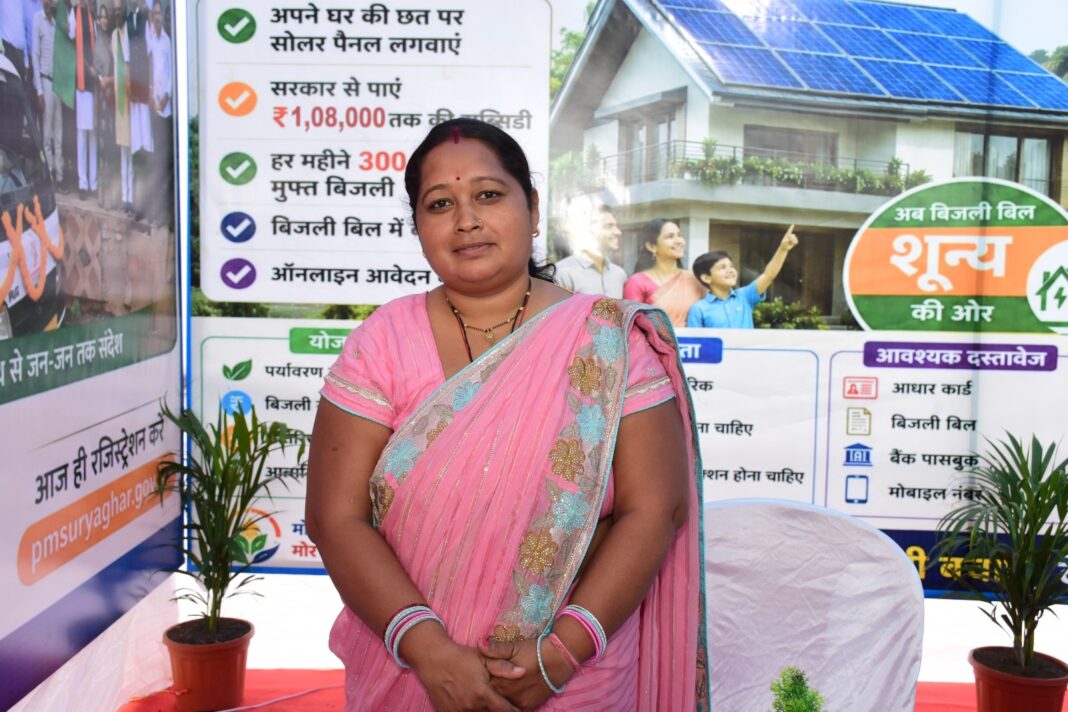
The Prime Minister’s Surya Ghar Muft Bijli Yojana is emerging as an effective instrument for economic savings and energy self-reliance among rural households. Mrs. Sarita Sonwani, a resident of Barga village in Rajnandgaon Development Block, has successfully installed a 3-kilowatt rooftop solar power system under the scheme, bringing her electricity bill down to zero while also generating surplus power.
Mrs. Sonwani stated that she was the first resident of Barga village to install a solar panel under the scheme. Her initiative has significantly increased awareness among villagers, encouraging several other families to consider adopting rooftop solar systems.
Before the installation, her household electricity consumption was relatively high, particularly during the summer months, resulting in monthly electricity bills of nearly ₹2,000. Seeking a long-term solution to rising energy expenses, she learned about the Prime Minister’s Surya Ghar Muft Bijli Yojana through the village panchayat secretary.
ALSO READ-
- New Industrial Push in Chhattisgarh to Generate 3,500 Jobs, Yash Fans Plant to Boost Manufacturing
- Jubin Nautiyal Sets Rajnandgaon Ablaze with Music as Dr Raman Singh Celebrates His Birthday
- PMGSY Road Works in Rajnandgaon: Superintending Engineer Stresses Quality and Timely Completion
- Floriculture Hub Incentive Scheme Boosts Flower Cultivation in Rajnandgaon
- Rajgami Estate to Undergo Three-Year Audit, Transparency to Be a Priority: Manoj Nirvani
Motivated by the benefits of the scheme, Mrs. Sonwani completed the prescribed application process, selected an authorized vendor, and applied for a bank loan. Following the completion of banking formalities, a 3-kW solar power system was installed on the rooftop of her home in January 2026.
Within one month of the installation, she received a subsidy of ₹1.08 lakh under the scheme, substantially reducing her financial burden. She noted that the maintenance of the solar system is simple and does not involve any significant additional expenditure.
Since the installation became operational, her household electricity bill has dropped to zero. Furthermore, the solar system is generating more electricity than the household consumes, enabling surplus units to be exported to the power grid. This excess generation is expected to provide her with additional income in the future.
Expressing gratitude to the government for the initiative, Mrs. Sonwani described the Prime Minister’s Surya Ghar Muft Bijli Yojana as highly beneficial for ordinary citizens. She emphasized that the scheme not only reduces electricity expenses but also promotes the adoption of clean and environmentally sustainable energy.