

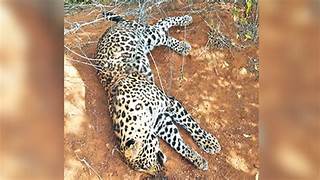

Post-mortem rules out poaching, but questions persist over wildlife monitoring and conservation mechanisms
Published on: January 04, 2025
By: BTNI
Location: Rajnandgaon, India
The discovery of a dead leopard in the Raniganj forest under the Dongargarh forest range of Rajnandgaon Forest Division has triggered concern and debate over the state of wildlife conservation in the region. The incident came to light on Friday in a forest area located near the administrative boundary of the Khairagarh and Dongargarh forest ranges, an ecologically sensitive zone known for frequent wildlife movement.
Following information from local sources, a forest department team rushed to the site and sent the carcass for post-mortem examination. Initial speculation pointed towards possible illegal hunting or death due to electric fencing, as similar incidents have been reported earlier from this belt.
What the Post-Mortem Revealed
According to the post-mortem report, the leopard had suffered a fracture in one of its legs, rendering it incapable of hunting. Prolonged inability to hunt led to extreme weakness, ultimately resulting in death. The report categorically ruled out poaching, electrocution, or any form of violent external injury.
Questions Remain Despite the Findings
While the medical report has dismissed the possibility of illegal hunting, it has not silenced concerns surrounding the effectiveness of wildlife protection on the ground. The incident has reignited debate on how rigorously the Wildlife Protection Act and biodiversity conservation measures are being implemented at the field level.
Also read- https://www.btnewsindia.com/self-defence-against-terrorism-is-indias-sovereign-right-external-affairs-minister-s-jaishankar/ https://www.btnewsindia.com/national-mathematics-day-celebrated-at-kamla-college-with-quiz-workshop-and-poster-competition/
Pressure on a Critical Migration Corridor
The forests of Khairagarh, Dongargarh, and the adjoining Maharashtra region form a natural wildlife migration corridor. Areas such as Mahadev Ji Maharaj region and Bortalaab witness regular movement of leopards and other wild animals.
Notably, just three weeks ago, another suspicious case involving a leopard was reported from the same region. During investigation, the animal’s claws and jaw—parts that fetch high prices in the international illegal wildlife trade—were found missing. That case remains under investigation.
Awareness Versus Accountability
Local residents allege that while the forest department appears reactive during major incidents, sustained surveillance and preventive measures are lacking. Incidents of poaching, electrocution, and unexplained wildlife deaths continue to surface, yet there is no publicly accessible consolidated data or analytical review of such cases.
Could Timely Action Have Saved the Leopard?
The fact that the leopard was injured for a prolonged period raises serious questions. Was the animal monitored through camera traps or regular patrolling? Could an early intervention and rescue have saved its life through medical treatment and rehabilitation?
Need for a ‘Case History’ of Every Death
Wildlife experts emphasize that every such incident must be documented in detail, with a comprehensive review to determine whether deaths are purely natural or indicative of systemic lapses. Without such accountability, conservation efforts risk remaining superficial.
While the leopard’s death may have been natural, the test of the wildlife conservation system is far from over.