

Under National Mission on Natural Farming, 150-hectare cluster developed; elderly farmer couple emerges as inspiration for chemical-free cultivation
Published on: January 01, 2025
By: BTNI
Location: Rajnandgaon, India
A growing number of farmers in Rajnandgaon district are turning towards organic and natural farming, driven by rising awareness about soil health, food safety and sustainable agriculture. The National Mission on Natural Farming (NMNF) has played a key role in motivating cultivators to adopt chemical-free farming practices, leading to improved crop quality and better economic returns.
Under the mission, a 150-hectare cluster was developed in Rajnandgaon development block in 2025 to promote natural farming methods. Farmers associated with the Pragati Women Self-Help Group of village Mokhla were provided structured training on preparing and using natural inputs such as Jeevamrit, Beejamrit, Ghanjeevamrit, Dashparni Ark and other bio-based formulations, according to crop stages.
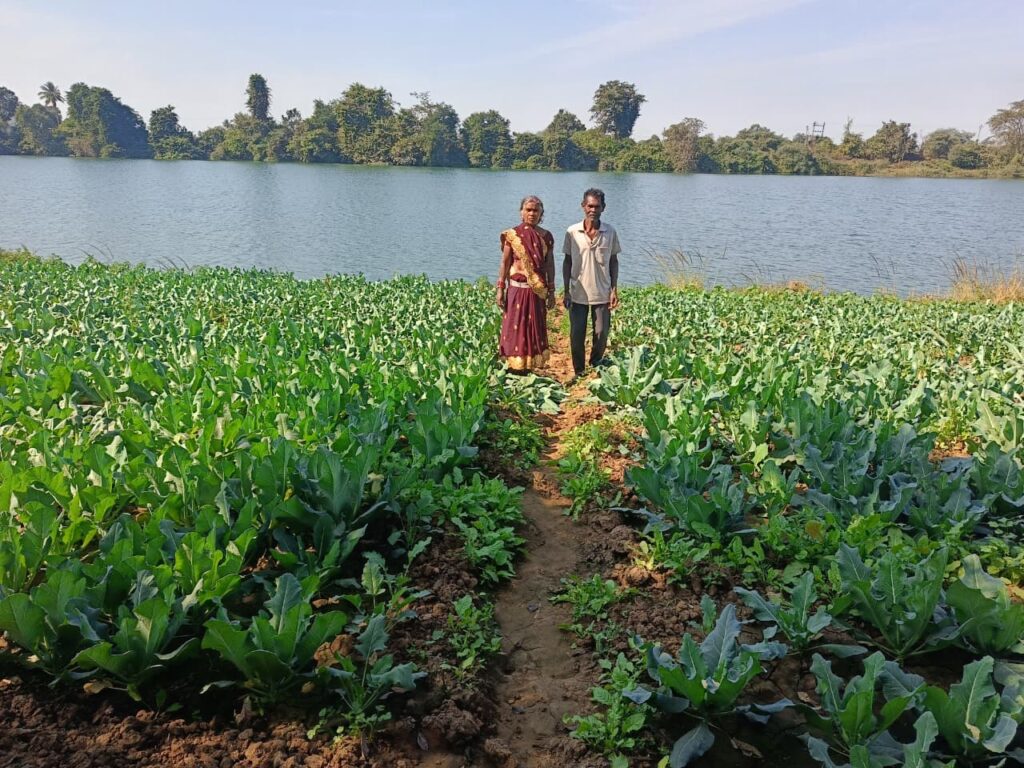
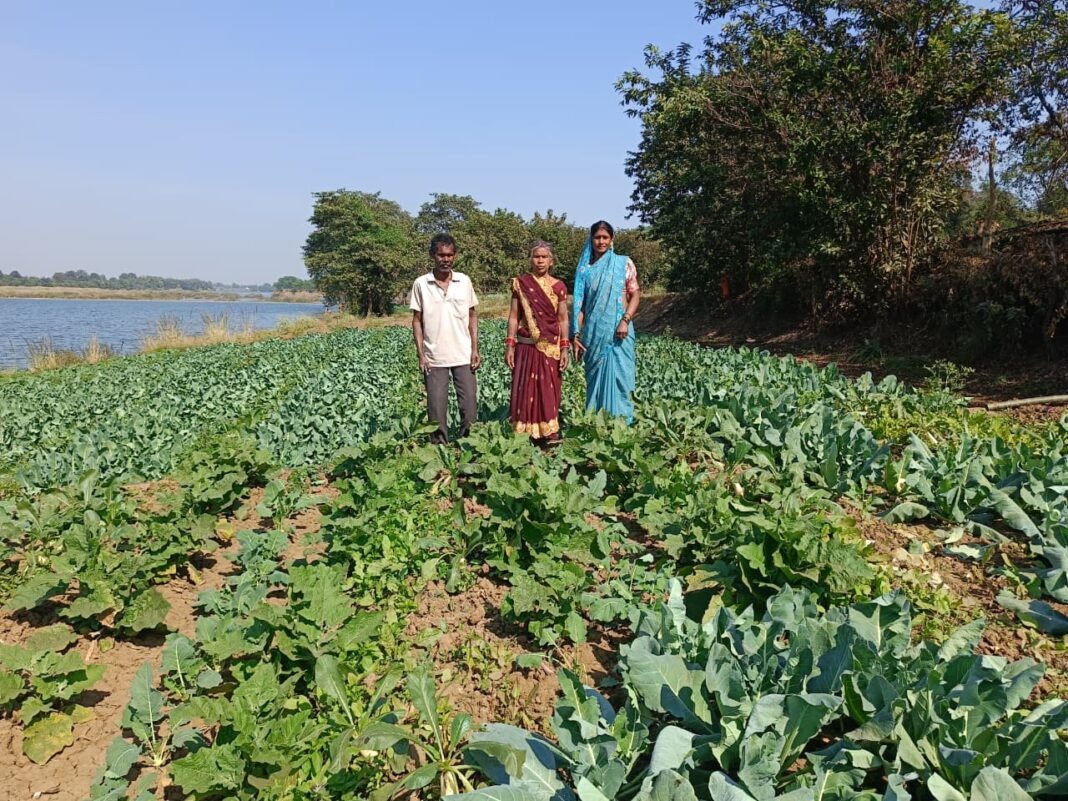
Among the beneficiaries, 68-year-old farmer Mrs. Manbhautin Bai Nishad and her 72-year-old husband Mr. Makhan Nishad from village Mokhla have emerged as successful examples of natural farming. Residing along the Shivnath river bank, the couple cultivates paddy and horticultural crops on a total of 2.34 acres of land, including owned and leased farmland.
Earlier, the couple relied heavily on chemical fertilisers and pesticides, earning an annual income of ₹50,000 to ₹60,000. However, frequent chemical usage raised concerns about soil degradation and health issues among consumers. This prompted them to shift towards natural farming, despite initial challenges such as lack of technical knowledge, fear of reduced yield and pest-related crop losses.
Mrs. Nishad said that after receiving proper training under the mission, their dependence on chemical fertilisers and pesticides was completely eliminated, significantly reducing cultivation costs. “Chemical farming used to cost ₹20,000 to ₹22,000 per acre. In natural farming, inputs like Jeevamrit, Ghanjeevamrit and Neem-based formulations are prepared using locally available materials such as cow dung, cow urine, jaggery, gram flour and buttermilk,” she explained.
The use of natural inputs has led to improved soil fertility, with an increase in earthworms and beneficial microorganisms. Officials noted that the quality of crops has improved considerably, making the produce chemical-free and safer for consumption. Due to better quality, farmers are now receiving higher market prices, with traders purchasing produce directly from farms.
Also read- https://www.btnewsindia.com/action-pending-in-₹16-crore-corruption-case-linked-to-budhasagar-ranisagar-beautification-project/ https://www.btnewsindia.com/swachhata-fortnight-concludes-at-krishi-vigyan-kendra-surgi/
Encouraged by the success of natural farming, the couple has expanded cultivation during the 2025–26 rabi season to include vegetables along with crops such as tivar, lentil and mustard, all grown using natural methods.
Agriculture officials described Mrs. Manbhautin Bai Nishad as a source of inspiration for farmers across the district. She has been honoured at various district-level programmes for her contribution to promoting natural and sustainable farming practices.
The district administration believes that the continued expansion of natural farming clusters will not only improve farmers’ incomes but also contribute to long-term soil health, environmental conservation and food safety in the region.