

From ‘Mann Ki Baat’ Recognition to Scientific Wildlife Revival, State Sets National Benchmark in Ecosystem Restoration
By: Dhananjay Rathore
Designation: Joint Director, Public Relations
Chhattisgarh is emerging as a national model in ecological restoration and wildlife conservation, with the successful revival of blackbucks in Barnawapara Wildlife Sanctuary symbolising a new era of environmental commitment and biodiversity protection.
From ‘Mann Ki Baat’ to National Recognition
Nature lovers often believe that nature never forgets human efforts toward conservation. When humanity takes sincere steps to protect the environment, nature responds by restoring its lost grandeur many times over. Known for its rich natural resources and dense forests, Chhattisgarh is now witnessing a golden phase in wildlife conservation.
Located in Balodabazar-Bhatapara district, the Barnawapara Wildlife Sanctuary, spread across nearly 245 square kilometres, has successfully witnessed the revival of blackbucks, whose population has now reached close to 200. The species, which had disappeared from the region during the 1970s, was reintroduced under a restoration plan launched in 2018 and strengthened through scientific efforts continuing up to 2026.

The achievement gained national attention when Prime Minister Narendra Modi mentioned the successful return of blackbucks in his popular radio programme Mann Ki Baat, elevating the initiative from a state achievement to a landmark moment in India’s environmental conservation journey.
Visionary Leadership and Policy Commitment
Chief Minister Vishnu Deo Sai credited the success to Chhattisgarh’s rich biodiversity and the government’s unwavering dedication toward environmental protection. According to him, the Prime Minister’s appreciation reflects national recognition of the hard work undertaken by the Forest Department and local communities.
Under his leadership, the state is striving to achieve a rare balance between development and ecological sustainability — an approach increasingly relevant in the global environmental discourse.
Scientific Strategy: From Extinction to Rehabilitation
The return of blackbucks to Barnawapara was once considered nearly impossible. However, under the guidance of Forest Minister Kedar Kashyap and strategic direction of Principal Chief Conservator of Forests (Wildlife) Arun Kumar Pandey, scientific conservation planning transformed the vision into reality.
February 2026 marked a milestone in Chhattisgarh’s forest history when 30 blackbucks were released into their natural habitat through the scientifically monitored “soft release” method. This ensured stress-free adaptation rather than simple relocation.
Improved nutrition and scientific care at the Blackbuck Conservation Centre significantly supported population growth.
Administrative Determination and Field-Level Efforts
The success of this ambitious conservation mission also reflects the dedication of field officials and frontline forest staff. Under the leadership of Chief Conservator of Forests (Raipur) Satovisha Samajdar and Divisional Forest Officer Dhammashil Ganveer, a committed team of biologists, veterinarians, and field personnel worked tirelessly.
High-tech surveillance systems, GPS tracking, and regular patrolling are currently ensuring the long-term safety of the revived blackbuck population, showcasing the technological capability of the Chhattisgarh Forest Department.
Rampur Grassland: Building a Sustainable Habitat
The conservation model at Barnawapara has evolved beyond species reintroduction into full ecosystem restoration. Scientific management of the Rampur grassland, restoration of natural water sources, and promotion of native grass species have created an ideal habitat for blackbucks to thrive.
Active participation of local communities has further strengthened human-wildlife coexistence, making the project a potential case study for other states.

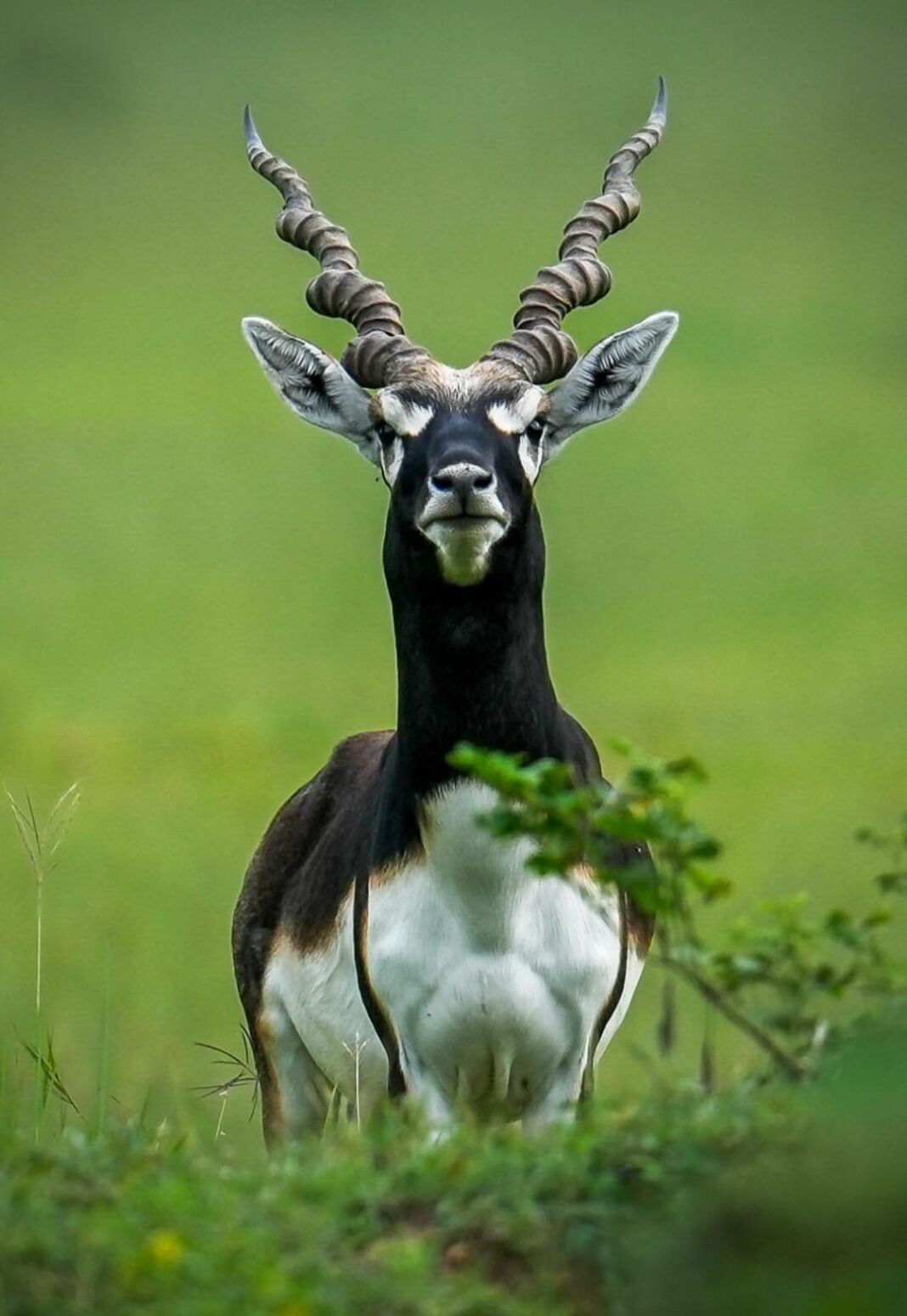
The blackbuck, an endangered antelope species native to the Indian subcontinent, is known for its spiral horns, distinctive coloration, and preference for open grasslands. Males typically possess dark brown to black coats with long spiral horns, while females are lighter in colour and usually hornless.
A Living Laboratory for Future Generations
The flourishing presence of blackbucks in Barnawapara stands as living proof that lost ecological heritage can be restored through collective responsibility and scientific planning. The sanctuary is now emerging as a “living laboratory” for future generations to learn sustainable coexistence with nature.
Chief Minister Vishnu Deo Sai stated that recognition through “Mann Ki Baat” has provided global visibility to Chhattisgarh’s conservation innovations. By linking environmental preservation with rural economic development, the state aims to build a future where both humans and wildlife remain secure.
Today, the sight of blackbucks freely roaming the open grasslands of Barnawapara reflects nature’s silent approval of Chhattisgarh’s conservation efforts — a success story inspiring the entire nation.
Also read-
- Rakesh Joshi Appointed Acting State President of Chhattisgarh PHED Contractors’ Association
- Crop Diversification Transforms Farming Outlook of Rajnandgaon Farmer Daulatram Sahu
- PM Surya Ghar Scheme Brings Electricity Cost Relief to Rajnandgaon Entrepreneur Raman Nahata
- ‘Viksit Bharat G-RAM-G’ Mission Launched; Rural Employment Increased to 125 Days
- Rajnandgaon Mineral Department Imposes Nearly ₹19 Lakh Penalty in Crackdown on Illegal Sand Mining