

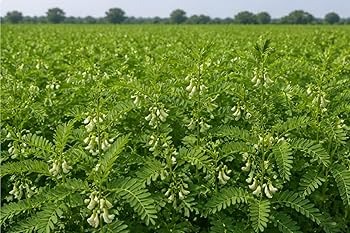

Green Manuring with Dhaincha Enhances Soil Fertility, Cuts Fertiliser Costs and Promotes Sustainable Agriculture
Published on: May 31, 2026
By: BTNI
Location: Rajnandgaon, India
The Agriculture Department is encouraging farmers to use Dhaincha (Sesbania) as green manure to improve soil health and reduce the consumption of chemical fertilisers. A leguminous crop, Dhaincha helps fix atmospheric nitrogen into the soil, thereby enhancing soil fertility and reducing the need for chemical fertilisers, particularly urea.
According to agricultural experts, Dhaincha should be sown at the onset of the monsoon season using 25 to 30 kilograms of seed per hectare. Approximately 35 to 40 days after sowing, when the plants reach a height of 1 to 1.5 metres and are in the early flowering stage, they should be incorporated into the soil using a tractor-operated disc harrow, rotavator or mouldboard plough.
Improves Soil Health and Nutrient Availability
After incorporation, maintaining adequate soil moisture allows the crop residue to decompose within 15 to 20 days. The decomposition process enriches the soil with nutrients that become available to subsequent crops.
The breakdown of Dhaincha increases the levels of organic carbon, nitrogen and other essential nutrients in the soil. It also improves soil structure, water-holding capacity and the activity of beneficial microorganisms, all of which contribute positively to crop productivity.
Agricultural scientists estimate that incorporating Dhaincha into the soil can provide approximately 40 to 60 kilograms of nitrogen per hectare. To obtain a similar amount of nitrogen through chemical fertilisers, farmers would need to apply around 90 to 130 kilograms of urea.
Savings of Two to Three Bags of Urea Per Hectare
As a result, farmers can save approximately two to three bags of urea per hectare by adopting Dhaincha as green manure. This not only lowers cultivation costs but also reduces dependence on chemical inputs.
The Agriculture Department highlighted that Dhaincha offers several advantages, including lower input costs, improved soil fertility, increased organic carbon content and enhanced microbial activity. It is also environmentally friendly and supports long-term soil sustainability.
ALSO READ-
- Gauri Nagar Cattle Slaughter Case: 10 Named Accused and One Juvenile Arrested, Sent to Jail
- Rajnandgaon Collector Jitendra Yadav and Zila Panchayat CEO Durga Prasad Adhikari’s Simplicity Wins Public Attention
- Political Storm Over the A B Bajpeyee’s (Atal ji) Principle: ‘Differences Are Acceptable, But They Must Not Turn Into Discord’
- Sale of Bhilai Steel Plant: Reports Are False and Misleading, Says BSP
- Political Row in Chhattisgarh BJP: Ramvichar Netam’s Visit to Congress MLA’s Farmhouse Triggers Local Discontent
In contrast, chemical urea contains 46 percent nitrogen and generally involves higher costs. Excessive and prolonged use may adversely affect soil fertility, does not increase organic carbon levels and can negatively impact beneficial microbial activity. Overuse may also contribute to environmental pollution.
Subsidy Available for Farmers
Interested farmers can obtain Dhaincha seeds from the Seed Processing Centre of the Seed Corporation Office at Kaurinbhatha, Rajnandgaon.
To promote the use of green manure, the Agriculture Department has made provisions to provide farmers with a 50 percent subsidy on the total cost of adopting Dhaincha. Officials said the scheme will help farmers reduce cultivation expenses while improving soil health and maintaining long-term agricultural productivity.
Recommended for Existing Cropping Systems
The department has advised farmers to integrate Dhaincha into the district’s prevalent cropping systems, including paddy-wheat, paddy-chickpea, paddy-vegetable and soybean-based crop rotations.
Under these cropping patterns, the use of Dhaincha as green manure can provide approximately 40 to 60 kilograms of nitrogen per hectare and save two to three bags of urea.
Farmers have been advised to sow Dhaincha immediately after the onset of the monsoon, incorporate it into the soil before flowering at 35 to 40 days of growth, and undertake sowing or transplantation of the main crop 15 to 20 days later.
The Agriculture Department has appealed to farmers to adopt balanced nutrient management practices and increase the use of green manures such as Dhaincha to reduce reliance on chemical fertilisers and promote sustainable agricultural production.