

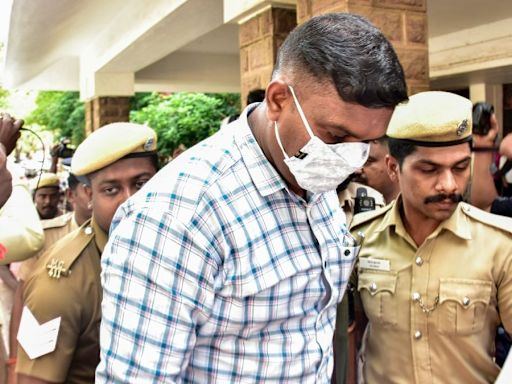

Landmark Verdict After Six Years Sparks Nationwide Debate on Police Accountability and Human Rights
Published on: April 08, 2026
By: BTNI
Location: Chennai, India
In a historic judgment that has reignited the national debate on custodial violence and police accountability, a court in Tamil Nadu has sentenced nine policemen to death in the widely discussed Sathankulam custodial death case. The verdict, delivered nearly six years after the incident, is being viewed as a strong assertion of judicial firmness and a significant step toward ensuring accountability within law enforcement agencies.
Background of the 2020 Incident
The incident dates back to 2020 during the COVID-19 lockdown. In Sathankulam town of Thoothukudi district, P. Jayaraj, a mobile shop owner, and his son J. Bennix were taken into police custody for allegedly keeping their shop open beyond permitted hours.

According to allegations, both men were brutally assaulted inside the police station throughout the night and subjected to inhuman torture. Despite their severely injured condition, they were later sent to judicial custody. Within a short period, both father and son succumbed to their injuries, triggering nationwide outrage and widespread protests.
CBI Investigation and Court Findings
Following massive public pressure and demands for an impartial inquiry, the investigation was handed over to the Central Bureau of Investigation (CBI). The probe established charges of murder and custodial brutality against the accused police personnel.
The court classified the case under the “rarest of rare” category and awarded capital punishment to all nine convicted policemen, observing that custodial torture leading to death represents a grave violation of constitutional rights and human dignity.
Public Reaction Across the Country
The verdict has drawn sharp reactions from across India. Large sections of the public and civil society groups have welcomed the judgment, calling it a victory for justice and a powerful message against custodial violence.
Social media platforms witnessed an outpouring of support, with many citizens stating that the ruling sends a clear warning against abuse of police authority. Human rights organisations also praised the decision, asserting that it may act as a deterrent against future custodial excesses.
Also read-
- Assessment Camp Held in Rajnandgaon to Provide Assistive Devices to Senior Citizens and Persons with Disabilities
- Rajnandgaon Police Take 199 Actions During 12-Day Ganesh Festival Drive
- PM Surya Ghar Scheme Brings Zero Electricity Bill and Monthly Savings for Sahdev Verma’s Family
- Rajnandgaon Range Police Focus on Swift Recovery of Cyber Fraud Money
- Seva Sankalp Campaign: Community Participation Drives Cleanliness and Public Welfare Initiatives in Rajnandgaon
Debate Over Capital Punishment
At the same time, several legal experts have initiated discussions on the broader issue of the death penalty. While acknowledging the seriousness of the crime and the need for strict punishment, some jurists argued that India must continue balancing deterrence with reformative justice principles.
Family’s Response and Legal Significance
The victims’ family expressed satisfaction with the court’s decision, stating that justice had finally been delivered after years of legal struggle and emotional hardship.
Legal observers believe the judgment marks an important milestone in strengthening the rule of law and reinforcing accountability within India’s policing system. The ruling is expected to influence future jurisprudence concerning custodial violence and human rights protection.