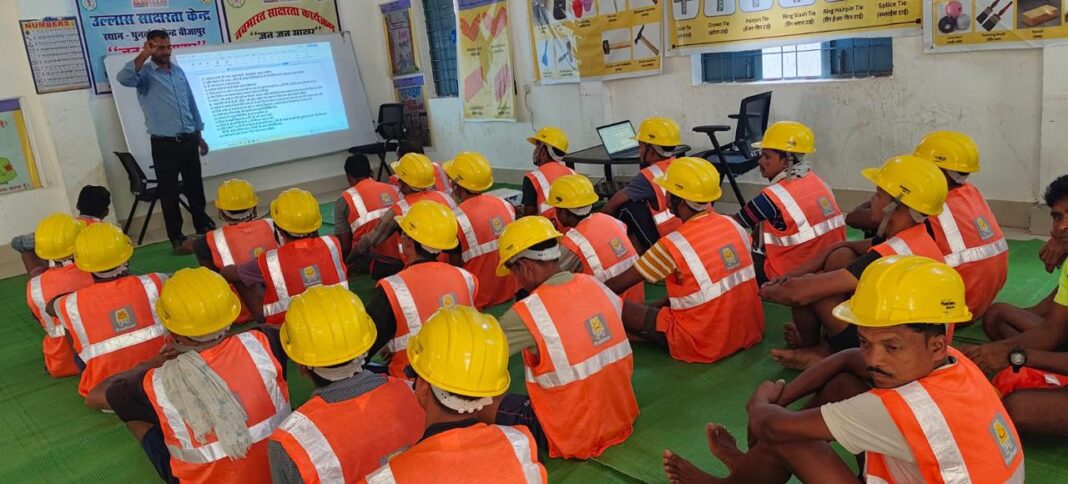


55 Women Linked to Fish Farming with CSR Support; Average Profit of ₹50,000 per Pond Estimated Over Six Months
Published on: October 28, 2026
By: BTNI
Location: Raipur, India
Livelihood ponds and Amrit Sarovars are emerging as additional sources of income for rural women and farming families in Chhattisgarh. By promoting fish and shrimp farming in these water bodies, the state is encouraging rural communities to use local water resources for income generation alongside agriculture and animal husbandry.
Under the VB-G RAM G scheme, livelihood ponds are being developed as productive water resources to promote fisheries, strengthen women’s economic independence and create self-employment opportunities in rural areas.
90 Livelihood Ponds Under Development
In Dhamtari district, livelihood ponds are being used to connect rural women with fish production activities. Villages including Bhukhapara, Madamshilli, Bindrapali, Dabrinala, Chanagaon and Chhindauri are among the locations where these initiatives are being undertaken.
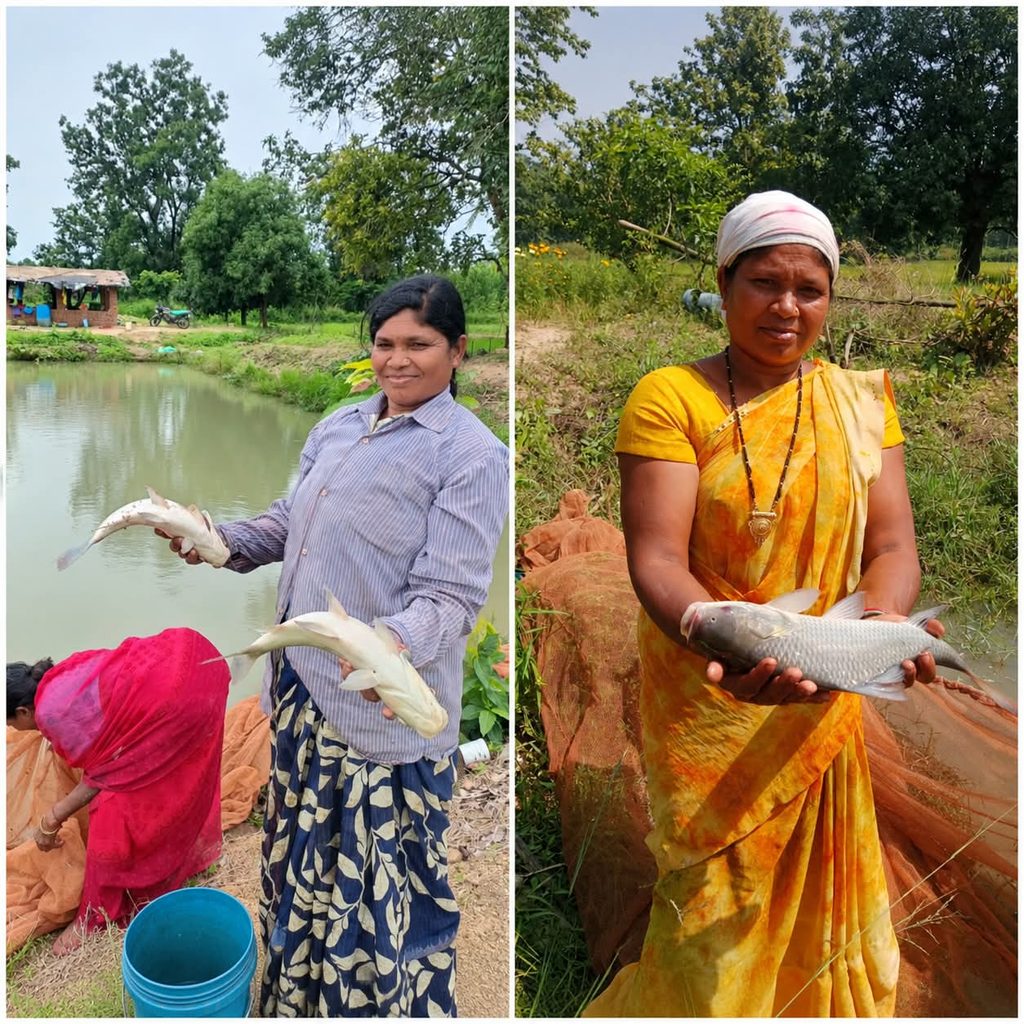
With support from Corporate Social Responsibility (CSR), 55 livelihood ponds have been developed to connect women with fisheries-related activities. The initiative is intended to provide them with opportunities to earn additional income within their own villages.
Another 90 livelihood ponds are being developed as part of efforts to expand income-generating activities and improve the use of local resources.
Under the programme, livelihood ponds are being developed as water reservoirs for promoting shrimp and fish farming. The Fisheries Department is also involved in supporting these activities.
Fish and Shrimp Farming to Strengthen Rural Livelihoods
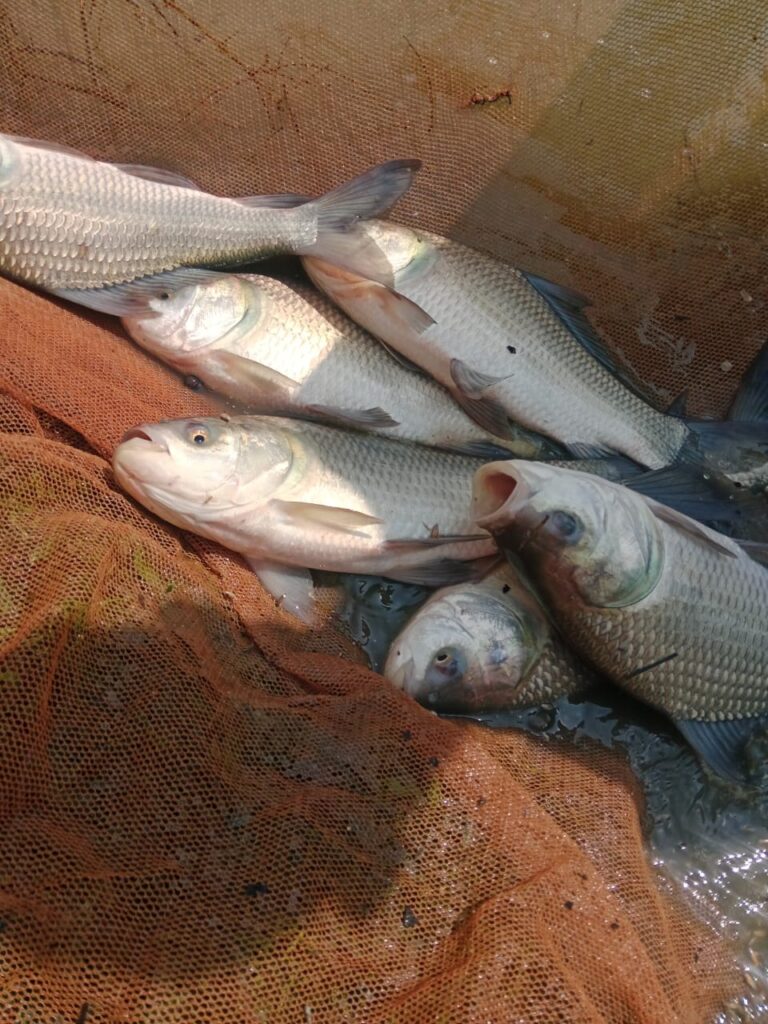
Under the initiative, each livelihood pond has been stocked with 1,600 shrimp and 320 Indian Major Carp (IMC) fish seeds. Promoting shrimp and fish farming together is intended to increase production from available water resources and create additional livelihood opportunities.
The estimated profit over the next six months is ₹50,000 per pond on average. However, this is a projection, and actual earnings will depend on production levels, water quality, farm management, market prices and sales.
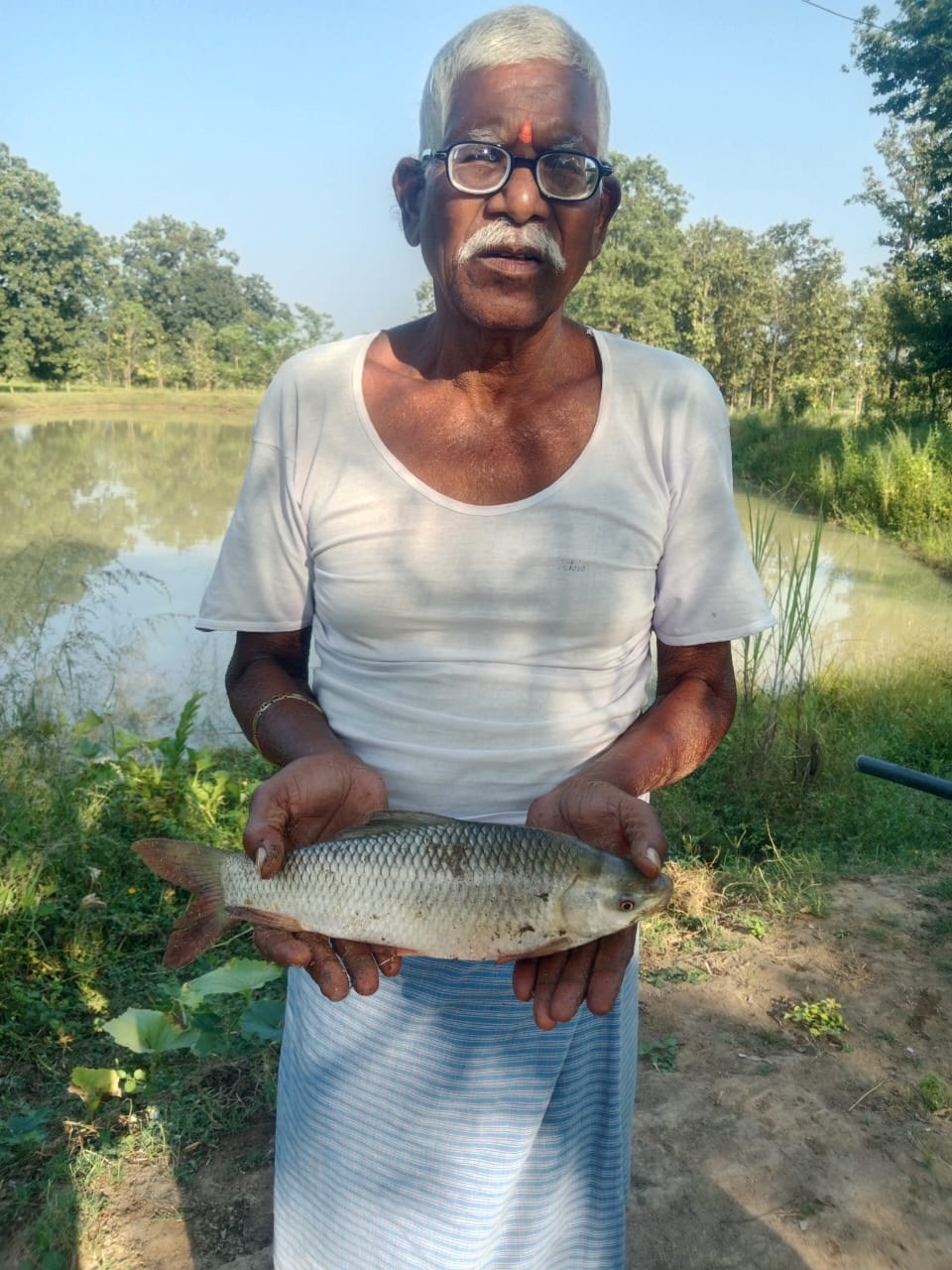
Fish growth of between 800 grams and 1 kilogram has been recorded, according to the information provided.
Additional Income Opportunities for Rural Women
Fish farming in livelihood ponds can provide women with an additional source of income alongside their traditional livelihood activities. By enabling production within their villages, the initiative aims to increase women’s participation in local economic activities.
The additional earnings could help women contribute more to household income, meet family needs and strengthen their confidence in self-employment.
Livelihood ponds are also being used for rainwater conservation. Farmers can use the stored water for fish farming and, when required, for vegetable cultivation and irrigation. This approach seeks to combine water conservation with productive economic activities.
Focus on Sustainable Livelihoods and Women’s Empowerment
Dhamtari Collector Abinash Mishra said that planned utilisation of available water resources could create sustainable livelihood opportunities for rural women.
He said the initiative to promote shrimp and fish farming in livelihood ponds would provide women with opportunities to earn income in their own villages. Connecting 55 women with fish production through CSR support is an important step towards women’s empowerment and strengthening the rural economy, he added.
The Collector emphasised that technical guidance, regular monitoring and improved marketing arrangements could help make these activities more sustainable.
Zila Panchayat Highlights the Importance of Local Resources
The Chief Executive Officer of the Dhamtari Zila Panchayat said that developing sustainable livelihood opportunities was essential to increasing rural household incomes and strengthening women’s economic independence.
Linking livelihood ponds with productive activities under the VB-G RAM G scheme is an important step in this direction, the CEO said. CSR support has helped connect 55 women with fish production while encouraging the productive use of local water resources.
The CEO also highlighted the importance of supporting women throughout the production and marketing process to make income opportunities more sustainable.
Technical Support and Market Access Key to Success
The initiative extends beyond fish production, focusing on the productive use of natural resources available in rural areas. Proper pond management, quality fish seed, feeding practices, regular monitoring and access to markets will be important factors in its success.
Providing women with technical guidance in fisheries, feed management and marketing could further improve production prospects and help strengthen long-term livelihood opportunities.
Through these efforts, Chhattisgarh aims to promote women’s empowerment, encourage village-level self-employment and increase the economic contribution of rural families.
ALSO READ-
- Collector Reviews Academic Activities at Prayas Residential School in Rajnandgaon
- ₹400-Crore Mega Multi-Fruit Food Processing Unit to Be a Milestone in Rajnandgaon’s Development: Komal Singh Rajput
- Livelihood Ponds to Boost Women’s Income in Chhattisgarh
- Skill Training Opens New Pathways to Self-Reliance for Bastar Youth
- Congress to Mobilise for November 1 Rally in Delhi to Protect Voting Rights: Rajesh Thakur