
National Unity Day: Remembering the Iron Man’s Vision, Determination and Historic Contribution to Building an Integrated India
His political foresight and firm leadership laid the foundation of a united nation, while his ideals of unity, integrity and collective strength continue to inspire generations.
Published on: October 30, 2026
By: BTNI
Location: Rajnandgaon, India
The birth anniversary of Sardar Vallabhbhai Patel, the Iron Man of India and one of the principal architects of national unity, is observed every year on October 31 as National Unity Day. The occasion symbolises the nation’s commitment to preserving its unity, integrity and sovereignty.
India’s independence in 1947 was not merely the end of foreign rule; it also marked the beginning of the historic task of building a strong, integrated and democratic nation. At that time, the Indian subcontinent was politically fragmented, with more than 560 princely states alongside British India. Bringing these territories together into a unified nation was an enormous challenge.
Sardar Vallabhbhai Patel, India’s first Deputy Prime Minister and Home Minister, undertook this historic responsibility with exceptional determination, political wisdom and leadership. His tireless efforts laid a strong foundation for the unity and integrity of modern India.
The Iron Will Behind India’s Political Integration
At the time of independence, political integration was among the biggest challenges facing the country. The princely states had their own rulers, administrative systems and political aspirations. Their integration into the Indian Union required diplomatic skill, practical judgement and decisive leadership.
At this critical juncture, Sardar Patel emerged as the architect of national unity. Through determination, a pragmatic approach and diplomatic ability, he worked to bring the princely states together under one national framework.
Historian Rajmohan Gandhi has also recognised Patel’s political realism and commitment to national unity as important elements in the making of modern India. Patel believed that the real strength of a nation lies in its unity, organisation and collective resolve.
The Historic Mission of Integrating the Princely States
Sardar Patel worked closely with his associate and senior administrator V.P. Menon to advance the process of integrating the princely states into the Indian Union. Through dialogue with their rulers, he explained the importance of national unity and encouraged them to join the newly independent nation.
The Instrument of Accession became an important legal mechanism in this process. Patel demonstrated political understanding, diplomatic skill and firm decision-making in ensuring the integration of the majority of princely states.
He also played an important role in complex cases involving Hyderabad, Junagadh and Jammu and Kashmir. By 1949, most of the princely states had been integrated into the Indian Union.
This achievement was not merely an expansion of geographical boundaries; it laid the historic foundation for a strong and integrated nation.
From Political Integration to Strong National Institutions
Sardar Patel’s contribution extended beyond the integration of princely states. As independent India’s first Home Minister, he also played an important role in strengthening the country’s administrative framework.
His vision was instrumental in providing a strong foundation to the All India Services, particularly the Indian Administrative Service (IAS) and the Indian Police Service (IPS).
He believed that a capable, impartial and disciplined administrative system was essential for maintaining the country’s unity and integrity. He regarded the administrative services as the steel framework that could help hold the nation together.
His foresight continues to remain relevant, as the All India Services play an important role in maintaining administrative coordination, promoting good governance and strengthening national integration.
National Unity Day and Its Enduring Message
In recognition of Sardar Vallabhbhai Patel’s exceptional contribution to nation-building and national integration, the Government of India began observing October 31 as National Unity Day in 2014.
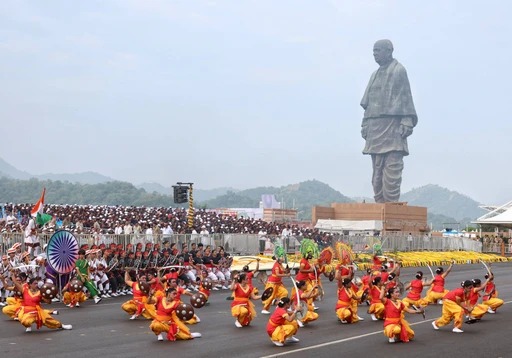
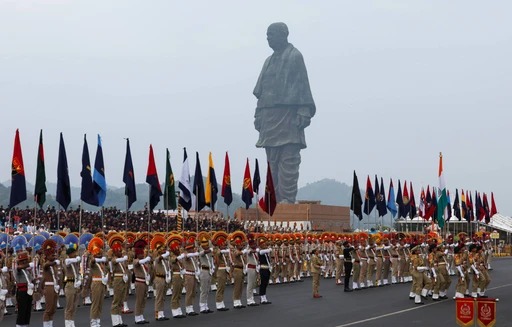
Across the country, the occasion is marked through unity runs, collective pledge ceremonies, unity parades and public awareness programmes. These activities aim to strengthen citizens’ commitment to national unity, integrity and patriotism.
The 182-metre-tall Statue of Unity at Ekta Nagar in Gujarat stands as a symbol of Patel’s towering personality and his historic contribution to bringing the country together.
ALSO READ-
- Collector Directs Survey to Assess Crop Damage Caused by Cyclone Arnab in Rajnandgaon
- Sardar Vallabhbhai Patel: The Enduring Legacy of the Architect of National Unity
- New 33/11 kV Substation Energised at Vicharpur Nawagaon, 4,250 Consumers Across 31 Villages to Benefit
- Purnima Sahu Inspects Under-Construction Food Processing Unit at Somni
- National Unity Day: Sardar Patel’s Vision of an Integrated and Strong India
His legacy continues to inspire citizens to work collectively for national development. In a country characterised by diverse languages, cultures, traditions and social beliefs, his message of unity remains especially relevant.
Unity in Diversity: India’s Greatest Strength
India’s identity is rooted in its extraordinary diversity. People belonging to different religions, communities, languages and cultural traditions live together as part of one nation.
National unity does not require uniformity in thoughts, customs or lifestyles. Rather, it depends on mutual trust, social harmony and a shared commitment to the country’s future.
Patel’s ideals encourage citizens to rise above divisions based on caste, religion, language and region and place national interests above narrow considerations. His message reminds us that collective strength can be achieved only when people remain organised and united.
An Immortal Legacy of Unity and Integrity
The life of Sardar Vallabhbhai Patel is an inspiring example of how firm determination, visionary leadership and collective efforts can achieve goals that may initially appear impossible.
Nearly eight decades after independence, his ideas continue to guide India’s efforts to preserve national unity and integrity. The country’s linguistic, cultural and regional diversity remains its distinctive identity, and strengthening mutual trust and social harmony amid these differences is the responsibility of every citizen.
One of Patel’s widely remembered messages emphasises that people’s strength becomes meaningful only when it is properly organised and united. This principle continues to provide direction to collective efforts in nation-building.
National Unity Day reminds us that India’s real strength lies in unity in diversity, democratic values and the unwavering commitment of its citizens to the nation.
Sardar Vallabhbhai Patel’s vision, determination and spirit of public service will continue to inspire future generations to build a strong, prosperous and integrated India. Upholding unity, brotherhood and mutual harmony is the truest tribute to the Iron Man of India.

