

Special field-based programme focuses on digital forest management, wildlife conservation, and modern monitoring tools in Chhattisgarh
Published on: January 30, 2026
By: BTNI
Location: Raipur, India
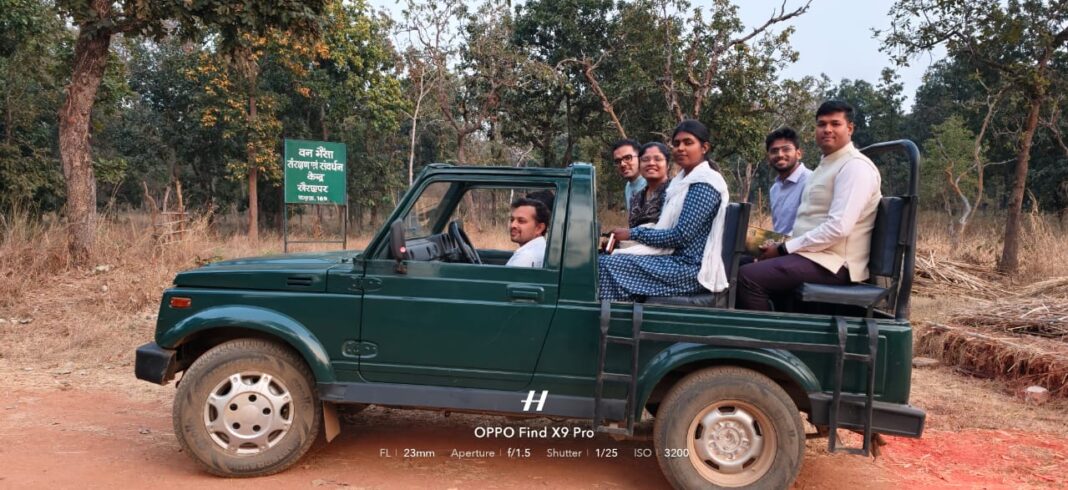
A special capacity-building programme was organised for trainee Indian Forest Service (IFS) officers at Barnawapara Wildlife Sanctuary, offering hands-on exposure to modern forest management practices and wildlife conservation techniques.
The training focused on advanced technologies, IT-enabled forest governance, and practical field applications, enabling future forest officers to gain first-hand experience of tools and management processes used at the ground level.
Addressing the trainees, Chhattisgarh Forest and Climate Change Minister Shri Kedar Kashyap encouraged them to continuously enhance their skills through the use of modern technology and to work with dedication towards the protection and conservation of the state’s rich forest resources. He extended his best wishes to all trainee officers for their future careers in public service.
During the programme, Chief Conservator of Forests (Wildlife) and Regional Director Ms. Stovisha Samajdar explained the functioning, utility, and importance of DGPS (Differential Global Positioning System) in forest surveys, boundary demarcation, and scientific management. She highlighted that DGPS-based surveys enable precise data collection in forest areas, which plays a crucial role in long-term conservation planning and effective resource management.
In another key session, Deputy Director of Udanti–Sitanadi Tiger Reserve, Varun Jain, introduced the trainees to the “Gaj Sanket” mobile application. He explained that the app serves as an effective digital tool for elephant monitoring, movement tracking, human–elephant conflict management, and rapid information sharing. Officers were also familiarised with its field usage, data entry processes, and operational management through practical demonstrations.
Speaking at the conclusion of the programme, Divisional Forest Officer Balodabazar, Dhammsheel Ganveer, underlined the importance of such technical and field-oriented training for future forest service officers. He noted that the integration of modern technology, digital tools, and scientific management practices can significantly enhance the effectiveness of forest and wildlife conservation, while empowering officers to take informed decisions at the grassroots level.
Superintendent of Barnawapara Sanctuary, Krishanu Chandrakar, briefed the trainees on the geographical, ecological, and conservation-related characteristics of the sanctuary. The officers were also taken on field visits to key facilities, including the Wild Buffalo Conservation Centre, Blackbuck Relocation and Conservation Centre, grassland development zones, and other important sites. These visits provided participants with valuable on-ground insights into ongoing conservation initiatives.
Also read- https://www.btnewsindia.com/rajnandgaon-creators-leave-strong-imprint-at-raipur-literature-festival/ https://www.btnewsindia.com/state-paddy-procurement-brings-smiles-to-farmer-deval-sahu-plans-new-home-with-sale-proceeds/
The training programme reinforced the state’s commitment to building a technologically equipped and field-ready forest administration, aimed at safeguarding biodiversity while promoting sustainable forest management across Chhattisgarh.