

Congress stages strong protest at Collectorate in Rajnandgaon, submits memorandum against ‘anti-farmer’ policies
Published on: January 22, 2025
By: BTNI
Location: Rajnandgaon, India
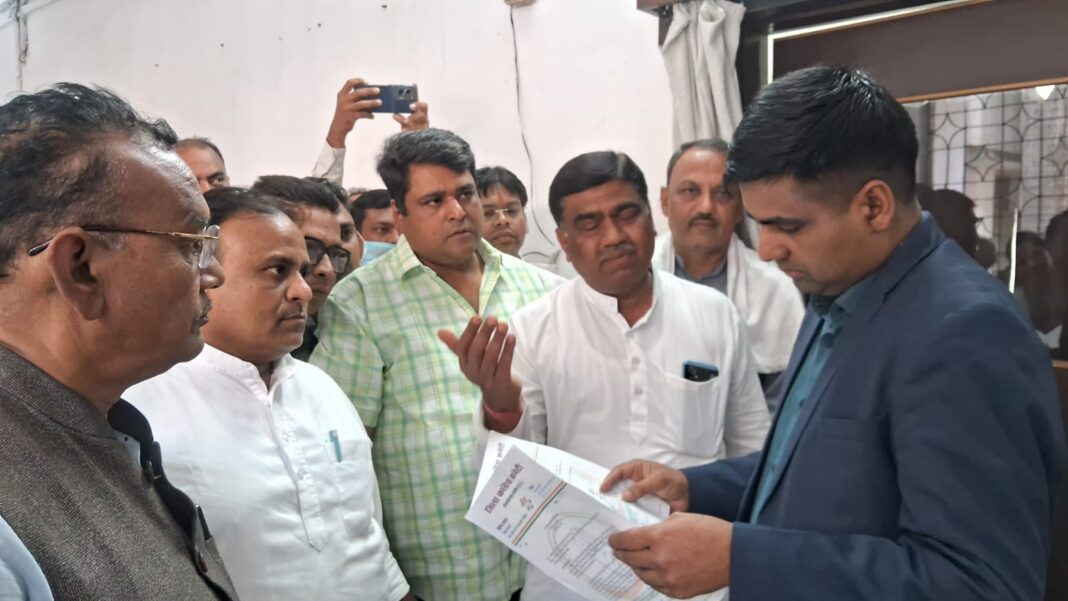
The Congress party on Wednesday registered a strong and organised protest in Rajnandgaon against what it described as anti-farmer policies, administrative insensitivity and the humiliation of rural society by the state government. Led by District Congress Committee president Vipin Yadav, party leaders submitted a detailed memorandum to the Governor through the District Collector, demanding immediate intervention on several pressing issues concerning farmers, labourers and the general public.
During the submission of the memorandum, Vipin Yadav discussed each issue with the Collector in a factual, logical and mature manner. His detailed articulation of concerns and administrative understanding underscored that the Congress’s protest was aimed not merely at opposition, but at seeking concrete solutions.
Calling the weakening of the Mahatma Gandhi National Rural Employment Guarantee Act (MGNREGA) an “attack on rural India”, Yadav said that diluting a legally guaranteed employment scheme strikes at the very foundation of village livelihoods. He alleged that attempts were being made to curb the powers of gram sabhas and panchayats, thereby undermining the spirit of democratic decentralisation, which the Congress would not accept under any circumstances.
Raising the issue of paddy procurement, Yadav said the failure to issue tokens on time had deprived a large number of farmers of the opportunity to sell their produce. He termed this a serious administrative lapse and demanded an immediate extension of the paddy procurement deadline. While the Collector briefed the delegation on the existing administrative arrangements and assured corrective measures, the Congress leadership maintained that ground-level problems remained unresolved.
The Congress also strongly objected to door-to-door “physical verification” of farmers who had received procurement tokens. Yadav described the exercise as humiliating and mentally distressing for farmers, accusing the administration of treating cultivators with suspicion instead of trust.
Highlighting the burden of rising electricity bills, Yadav said farmers, small traders, the poor and the middle class were reeling under high power tariffs. He demanded immediate implementation of the Congress’s promised scheme of providing 400 units of free electricity. He also expressed concern over rising fertiliser prices and called for fertilisers to be made available to farmers at affordable rates to prevent agriculture from becoming a loss-making activity.
Also read- https://www.btnewsindia.com/swadeshi-fair-to-be-inaugurated-in-rajnandgaon-on-january-22/ https://www.btnewsindia.com/archery-is-an-important-ancient-discipline-says-neelu-sharma/
In a sharp remark, Vipin Yadav said it was shameful for any sensitive government that farmers were forced to struggle to sell their own produce. He held the state government responsible for policy failures and administrative shortcomings, and demanded a public apology to farmers.
The active role and assertive leadership of Vipin Yadav and City Congress President Jitendra Mudaliyar during the protest remained a key point of discussion. Senior Congress leaders said the manner in which issues were presented at the Collectorate reflected the seriousness with which the party’s young leadership was addressing grassroots concerns.
Former MLA Chhanni Sahu, MGNREGA Bachao Sangram district in-charge and Pradesh General Secretary Deepak Dubey, along with several senior leaders, office-bearers and workers, were present during the submission of the memorandum.
Concluding the protest, Vipin Yadav warned that if the government failed to take prompt and sensitive decisions on issues affecting farmers, labourers and the common people, the Congress would intensify its democratic agitation in the coming days. “This is not a struggle against power, but a decisive movement for the dignity of farmers, the rights of workers and the protection of public interest,” he said.