

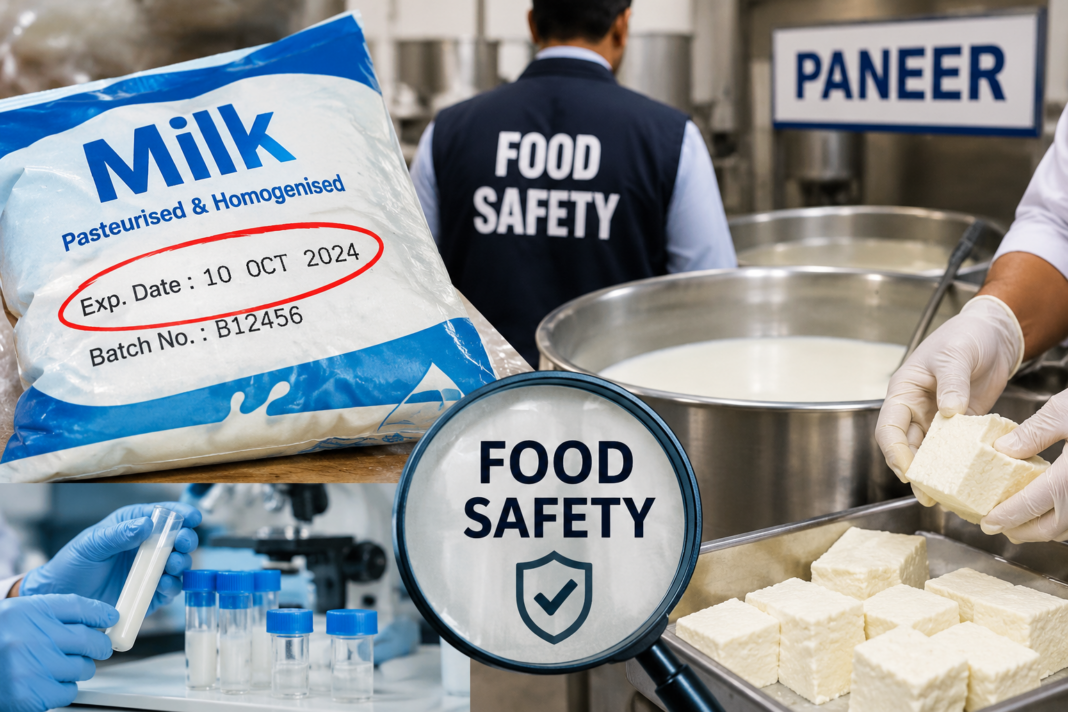

Transparency in Food Safety Actions Is Essential; Concrete Evidence Must Support Official Claims
The Responsibility of Food Safety Officials Goes Beyond Raids—It Is to Protect Consumers’ Health
Published on: October 24, 2026
By: Purushottam Tiwari
Location: Rajnandgaon, India
Milk is an essential part of our daily lives, with demand continuing from morning until night. From households to tea stalls, hotels, sweet shops and dairies, milk is consumed regularly. In such circumstances, when reports emerge that paneer was being made from packaged milk past its expiry date, several questions naturally arise. The issue is not merely one of food safety; it also concerns the entire system responsible for monitoring the procurement, supply, sale, storage and use of milk.
If expired milk is found at a dairy and allegations are made that it was being used to manufacture paneer, the *matter is *serious. However, seriousness does not mean merely issuing a press release announcing a major enforcement action. The public also has the right to know what was actually found at the premises, in what quantity, and what evidence formed the basis of the action.
*Milk/ is generally a fast-moving product, particularly packaged milk, which is distributed through an established supply chain. Nevertheless, milk can reach the end of its usable life at a business establishment. Possible reasons include excess supply, a decline in sales, products returned by retailers, improper storage or a disruption in the cold chain. Therefore, high milk consumption alone cannot completely rule out the possibility of expired milk being found. What matters, however, is establishing the actual reason in the case concerned.
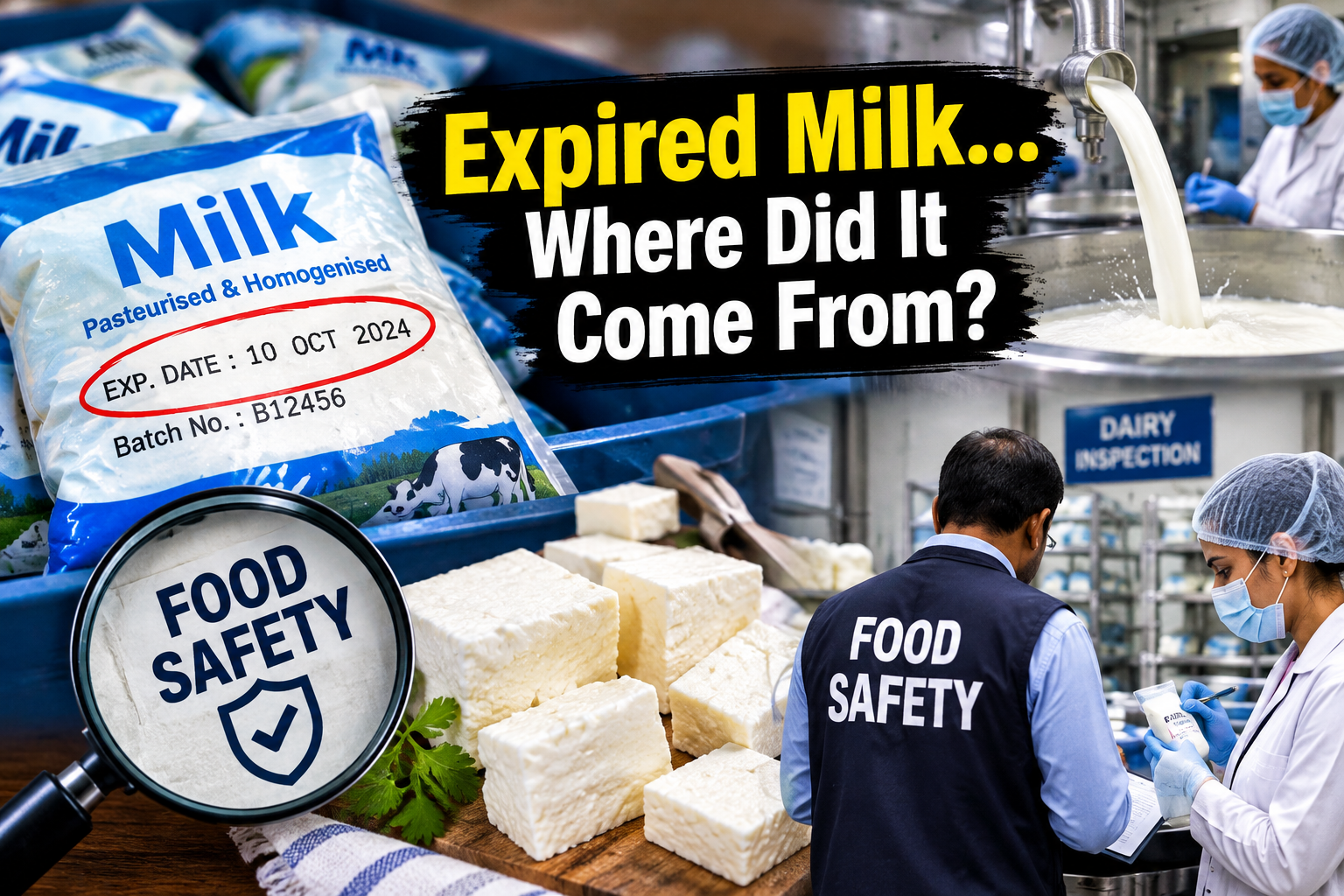
The most important question is whether the establishment was caught making paneer from expired milk, or whether the discovery of expired milk on the premises and the activity of paneer production were presented together as a single incident. There is a significant difference between these two situations. If direct evidence exists that paneer was being manufactured from the milk in question, the department should make that evidence public. If only expired milk was found, it would be inappropriate to present both facts as one established conclusion before the investigation is completed.
The responsibility of food safety officials is not limited to conducting raids; it is to protect consumers’ health. At the same time, allegations against a trader must be verified before enforcement action is taken. If samples of milk and paneer have been sent to a laboratory, the findings should be made public. Details such as the milk brand, batch number, number of packets, expiry date, storage conditions and seizure records could help establish the facts of the case.
Another aspect deserves attention. The fact that the date printed on a packet has passed does not mean that using the milk to prepare another food product will make it safe. The nature of the milk, its processing method and the prescribed storage temperature all affect its safety. Using expired milk to manufacture food products can therefore pose risks to consumers’ health. Negligence in such matters must not be tolerated.
However, enforcement action taken in the name of food safety must also be based on evidence. If regulations have been violated, those responsible should face action in accordance with the law. If the allegations are not substantiated by the investigation, that position must also be clarified. The public wants neither leniency towards those who compromise food safety nor a tendency to reach conclusions on the basis of incomplete information.
ALSO READ-
- Additional Collector C.L. Markandey Inspects Polygon Survey Work in Rajnandgaon and Ghumka
- Two New Classrooms Inaugurated at Digvijay College in Memory of Late Abdul Aziz
- BJP Launches ‘Save Democracy, Remove Mobocracy’ Campaign in Rajnandgaon
- With Such High Demand for Milk, Where Did the Expired Milk Come From?
- Police Commemoration Day: Rajnandgaon Police Pays Tribute to 154 Martyrs, Honours Families of Fallen Personnel
The question is straightforward: when demand for milk is so high, how did expired milk reach the establishment concerned, and who is responsible? Did the supplying agency take back the unsold stock? Were records maintained for packets returned by retailers? Was the milk stored at the prescribed temperature? Most importantly, was there evidence that paneer had actually been made from that milk?
The Food Safety Department must answer these questions with facts and documentary evidence. Transparency in food safety matters is essential to strengthening public confidence. The objective of enforcement action should not be merely to make headlines, but to establish accountability, identify those responsible and prevent similar incidents in the future.
Milk is a necessity in every household, and paneer is part of the diet of millions of people. There can be no compromise on the safety and purity of these food products. The conclusion is clear: milk safety must be monitored rigorously, those found guilty must face appropriate action, and the facts supporting every enforcement action must also be placed before the public. This is the true test of responsible administration, impartial journalism and the protection of consumer interests.