


Historical documents from Acharya Ramendranath Mishra’s collection showcase the state’s rich cultural and literary heritage at Bharat Mandapam, New Delhi
Published on: November 22, 2026
By: BTNI
Location: Raipur, India
A glimpse of Chhattisgarh’s rich historical and cultural heritage is attracting visitors to the state pavilion at the 45th India International Trade Fair, organised by the India Trade Promotion Organisation (ITPO) in New Delhi. Rare manuscripts, copper plates and historical records are among the major attractions at the Chhattisgarh Pavilion, located on the first floor of Hall No. 4 at Bharat Mandapam.
Spread across 1,000 square metres, the pavilion features historical artefacts displayed by the Archaeology Department of Chhattisgarh. These valuable collections, associated with Acharya Ramendranath Mishra, offer visitors an opportunity to explore different chapters of the state’s past.
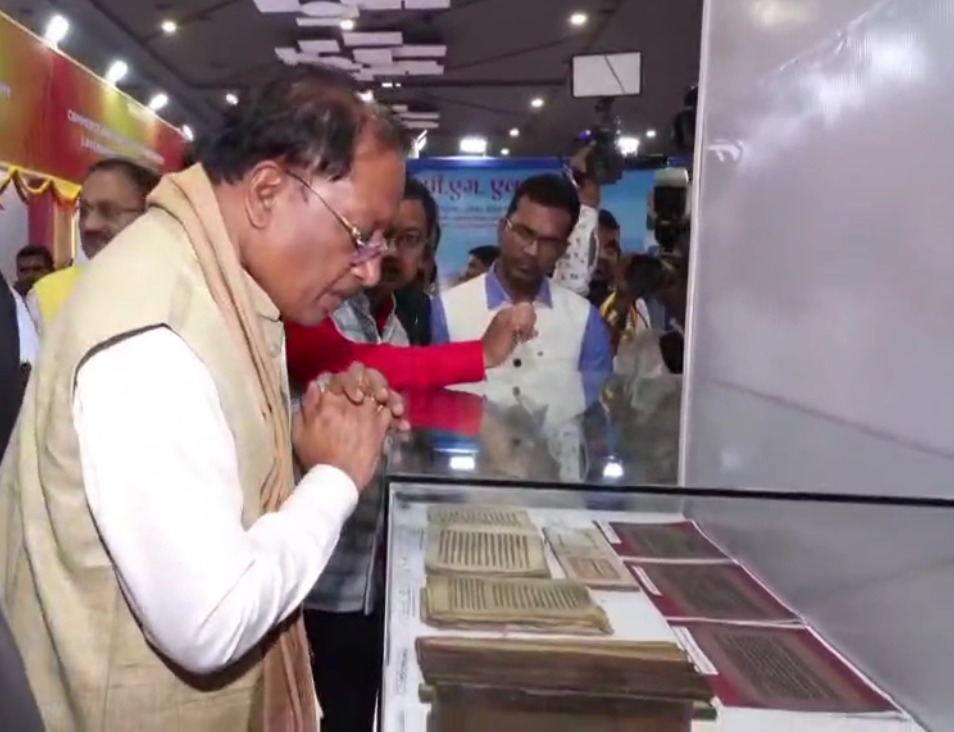
Chief Minister Vishnu Deo Sai visited the international trade fair at Bharat Mandapam on November 20 and addressed visitors at the Chhattisgarh Pavilion. He said the identity of Chhattisgarh was changing. While Bastar and the state were once widely discussed in the context of Maoism and challenges, Chhattisgarh was now presenting itself through its rich tribal heritage, vibrant folk culture, natural beauty and emerging development opportunities.
The pavilion reflects this changing identity through a combination of tradition and modernity, heritage and development, and local skills and economic potential.
Rare Historical Treasures on Display
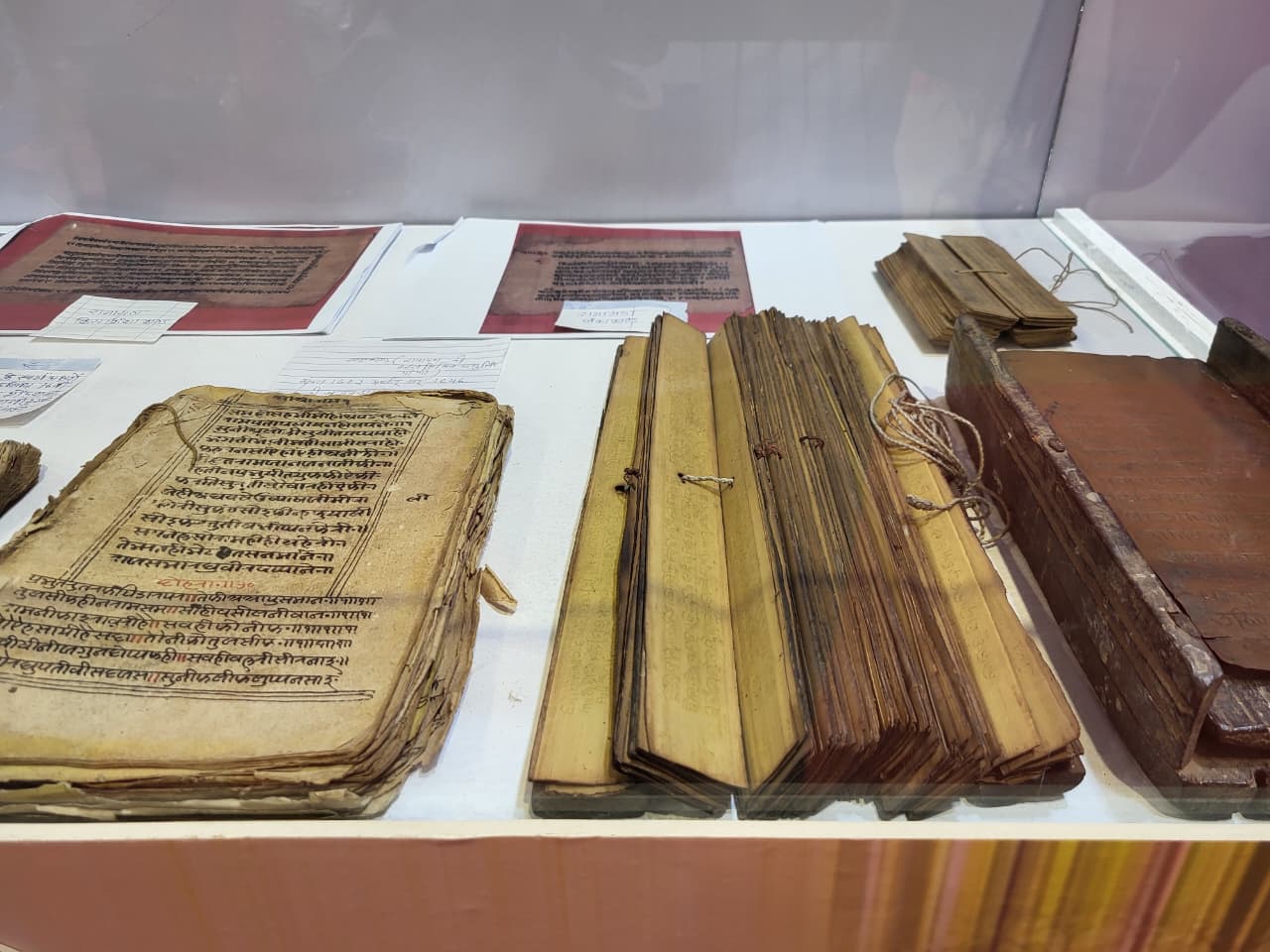
Among the exhibits are medicinal manuscripts and copper plates from the Kalachuri period. These include Khub Tamasha and Nasket, medicinal manuscripts associated with the Kalachuri era of Ratanpur.
A copper plate issued in 1735 by Amar Singh Dev, the last ruler of the Kalachuri dynasty of Raipur, is also on display. The document is an important source of information about the region’s political and administrative history.
Another notable exhibit is a rare gold-lettered manuscript associated with the era of Rani Durgavati of Garha-Mandla. A rare manuscript on the Ramayana, linked to the disciple tradition of Goswami Tulsidas through Sushendas Maharaj, is also part of the collection.
Manuscript Considered the First Historical Record of Chhattisgarh
A major attraction is Tawarikh-e-Haihaya Rajao Ki, written in 1858 by Babu Revaram Kayastha Pandit. It is regarded as the first manuscript on the history of Chhattisgarh.
Babu Revaram was a distinguished historian, poet and scholar who made Ratanpur, in present-day Bilaspur district, his field of work. His manuscript provides important information about the history and reigns of the Haihaya or Kalachuri rulers of Chhattisgarh.
The exhibition also features a handwritten revenue-related Sanad in Modi script from the reign of Maharaja Daulatrao Scindia of Gwalior. The document provides insights into the revenue and administrative arrangements of that period.
A Pre-World War I Account of Expenditure
A handwritten expenditure register prepared by Pandit Raghuvanshnath Thakur of Bilaspur offers a glimpse into the economic and financial conditions of Chhattisgarh before the First World War.
Pandit Thakur was a respected citizen and scholar who mentored E. Raghavendra Rao, who later became Chief Minister and Governor of the Central Provinces and Berar.
The register, dating to around 1913, records details that help explain the region’s financial management, everyday commodities and their prices. It is considered a valuable historical source for understanding the economic life of Bilaspur and the wider Chhattisgarh region during that period.
Rare Illustrated Manuscripts and a Historic Prison Magazine
The original copy of Shri Krishna Janmasthan Samachar, described as the country’s only illustrated bimonthly prison magazine, is another important exhibit. Rare illustrated manuscripts are also on display.
The magazine is regarded as India’s first handwritten prison magazine. It was edited and published by freedom fighter Pandit Sundarlal Sharma, popularly known as the Gandhi of Chhattisgarh, while he was imprisoned in Raipur Jail during 1921–22, with some references placing its publication in 1922–23.
During his imprisonment in the Non-Cooperation Movement, Sharma prepared six issues of the illustrated bimonthly publication. The magazine documented the alleged mistreatment of freedom fighters and prisoners by British officials and jail authorities, along with the harsh conditions inside the prison.
Gyan Bharatam Mission to Preserve Manuscript Heritage
The exhibition also highlights efforts under the Central Government’s Gyan Bharatam Mission to identify, survey, catalogue, preserve, conserve and digitise ancient manuscripts.
ALSO READ-
- Rare Manuscripts and Copper Plates Displayed at Chhattisgarh Pavilion at International Trade Fair
- Marigold Farming Earns Lakhs for Chhattisgarh Farmer Vidyadhar Patel
- Modi’s ‘Times Are Changing’ Message: A Reminder That Skills Matter Beyond Academic Degrees
- Traffic Police Crack Down on Illegal Parking in Rajnandgaon, 817 Vehicles Penalised in 20 Days
- BJP Cooperative Cell Raises Concerns Over Small Farmers’ Problems in Paddy Procurement
The mission aims to bring India’s extensive handwritten heritage to wider attention and ensure its protection for future generations. In line with the national vision of Viksit Bharat 2047, the initiative seeks to connect cultural preservation with human capital development and keep India’s traditional knowledge accessible to future generations.
Chhattisgarh Showcases Heritage and Development
The 45th India International Trade Fair, organised by ITPO, is being held from November 13 to 27, 2026. Through its participation, Chhattisgarh is presenting its historical legacy alongside its contemporary development opportunities on a national and international platform.
The Chhattisgarh Pavilion, spread across 1,000 square metres on the first floor of Hall No. 4 at Bharat Mandapam, also showcases the state’s traditional art, handicrafts, local products and emerging economic opportunities.
Visitors can explore the pavilion at Stall No. 4F-03-A.