

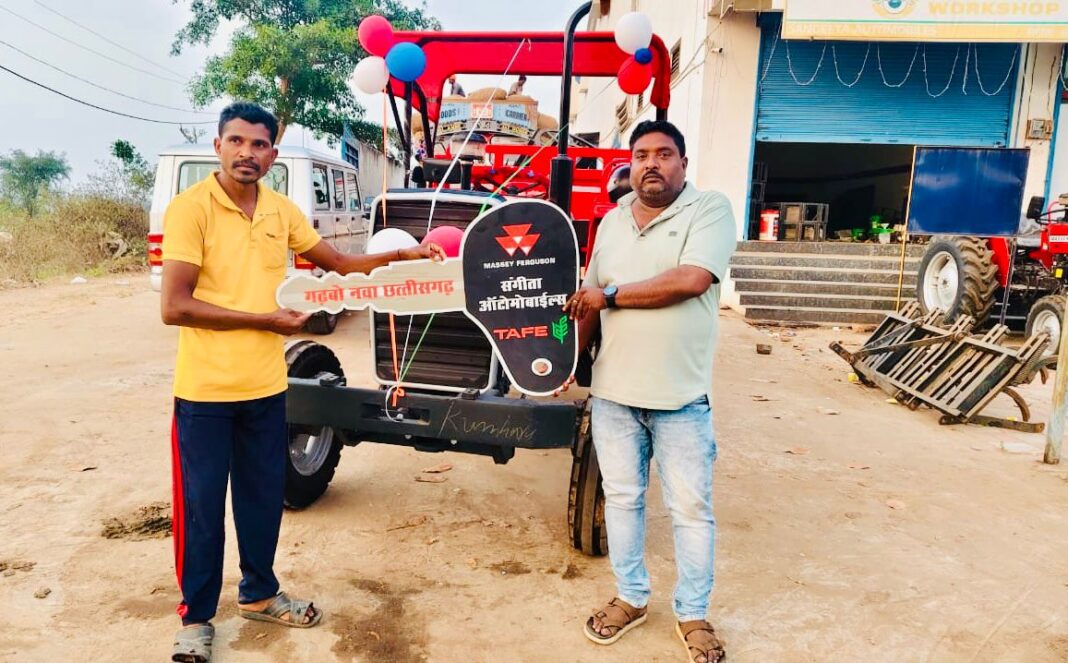

Good governance gains momentum under CM Vishnu Deo Sai as agriculture drives change in Naxal-affected Sukma
Published on: January 25, 2026
By: BTNI
Location: Raipur, India
Once known for violence and unrest, the remote forests of Bastar are now witnessing a quiet agricultural revolution, where the sound of tractors is replacing gunfire and fields are blooming with crops and hope.
Under Chief Minister Vishnu Deo Sai’s resolve to achieve a “Naxal-free Bastar” by March 31, 2026, and strengthened agricultural policies, tangible change is becoming visible on the ground. The journey of Koyna Baghel, a farmer from Chipurpal village in Sukma district, stands as a living example of this transformation.
Baghel recently sold 50 quintals of paddy at the Birsathpal procurement centre under the government’s Minimum Support Price scheme at ₹3,100 per quintal. Remarkably, the entire amount was credited directly into his bank account within just 48 hours.
With middlemen eliminated and payments ensured on time, Baghel used his earnings to purchase a new Massey Ferguson tractor along with a trolley — a milestone that symbolizes rising confidence among farmers in the state’s procurement system.
Also read- https://www.btnewsindia.com/congress-opposing-vb-g-ramji-scheme-under-gandhis-pretext-jagannath-panigrahi/ https://www.btnewsindia.com/netaji-subhash-club-to-get-new-two-storey-building-mayor-announces-at-birth-anniversary-event/
Calling the paddy procurement mechanism “highly beneficial,” Baghel expressed gratitude to Chief Minister Vishnu Deo Sai, saying the ₹3,100 MSP has provided significant relief to small and medium farmers and strengthened their financial stability.
The impact extends beyond agriculture. The newly acquired tractor has accelerated farm operations while also creating opportunities for additional income. Farmers are now supplying construction materials such as bricks and sand for PM Awas Yojana housing projects, adding a new layer of rural self-employment. Locals like Rajuram Nag have also begun moving toward financial independence through such activities.
Sukma Collector Amit Kumar said the farmer’s success reflects perseverance, patience, and effective implementation of government schemes in a district long affected by extremism.
“The Chhattisgarh government is continuously working to connect farmers with modern agricultural resources and welfare programs. Our priority is to ensure transparency, timely payments, and complete facilities at procurement centres,” the Collector said.
Under direct administrative supervision, Sukma’s paddy procurement centres have been transformed into “service hubs,” offering token systems, streamlined processes, and zero tolerance for irregularities. Officials say farmers no longer face hurdles from registration to payment.
Chief Minister Vishnu Deo Sai noted that regions once associated with Naxal violence are now witnessing an agricultural revival, driven by irrigation initiatives, technical support, and coordinated efforts between farmers and the administration.
He emphasized that Bastar’s changing landscape demonstrates how development, governance, and grassroots participation together can reshape even the most challenging regions.