


Farmers advised to closely monitor paddy, soybean, pigeon pea, urad, moong and cotton crops and use recommended plant protection measures only when required
Published on: September 27, 2026
By: BTNI
Location: Rajnandgaon, India
In view of continuous rainfall over the past two days and increased moisture in the atmosphere, the Agriculture Department has advised farmers in Rajnandgaon district to regularly monitor their crops for pest and disease outbreaks.
Farmers have been advised to closely observe paddy, soybean, pigeon pea, urad, moong and cotton crops and use recommended pesticides and fungicides only when required and in accordance with prescribed recommendations.
Continuous rainfall and increased humidity can create favourable conditions for fungal diseases as well as certain insect pests. The Agriculture Department has advised farmers to adopt crop-specific measures according to the present stage of their crops.
Paddy Crop: Special Monitoring Advised
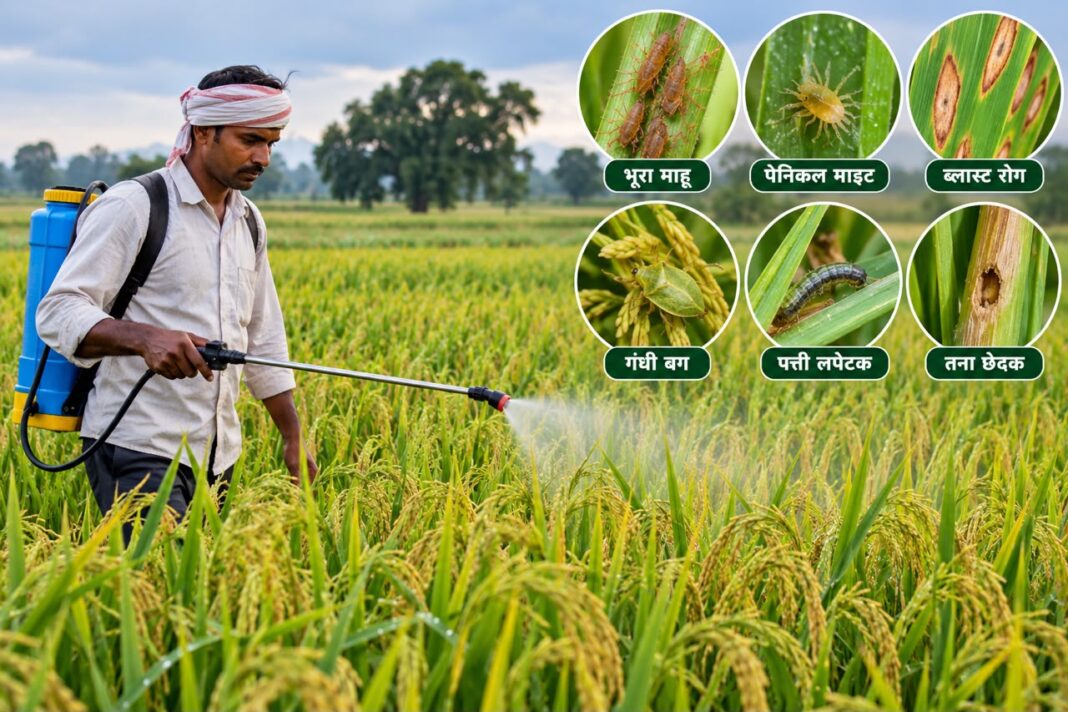
The paddy crop is currently around 70 to 80 days old and has entered the early grain-filling stage. Farmers have been advised to particularly monitor brown planthopper, panicle mite, rice bug, stem borer, leaf folder, blast, brown spot and sheath blight.
The presence of groups of small brown insects on the lower portion of plants may indicate brown planthopper infestation. In severe cases, affected plants may turn yellow and dry.
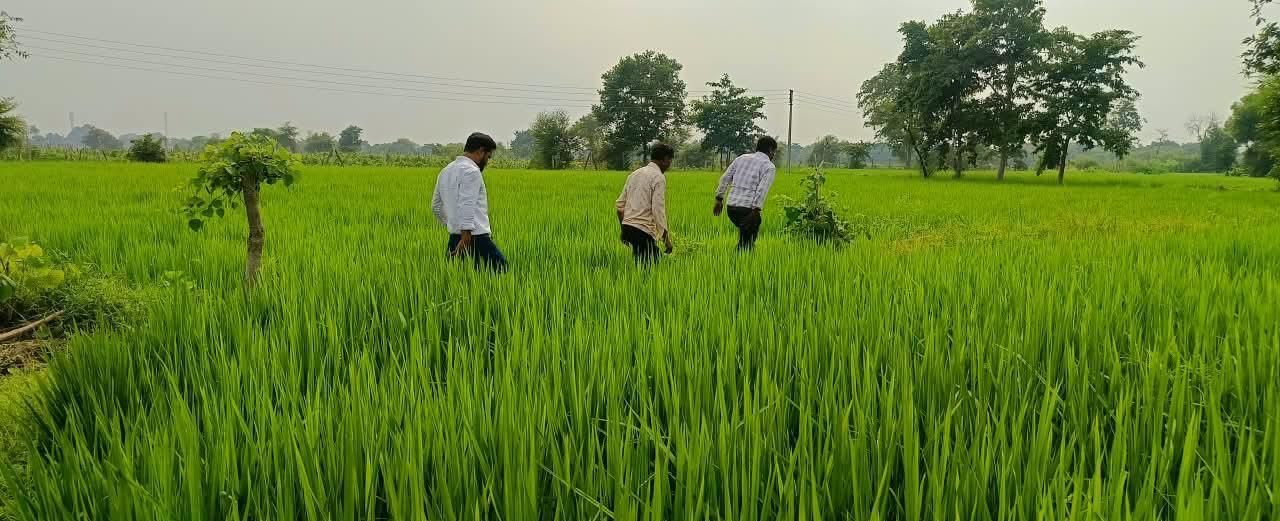
For control, Imidacloprid 17.8% SL at 100 ml per acre or Dinotefuran 10% + Pymetrozine 40% WG at 100 grams per acre may be used as recommended.
Farmers have been specifically advised against repeated and unnecessary insecticide applications in fields affected by brown planthopper and against excessive use of urea.
Panicle Mite and Rice Bug
At the panicle and grain development stage, panicle mite infestation can prevent grains from developing properly. Farmers have been advised to seek confirmation from agricultural experts when symptoms appear.
For control, Diafenthiuron 50% WP at 1–2 grams per litre of water or Propiconazole at 1 ml per litre of water may be used according to the product label and recommendation.
Rice bug can damage milk-stage grains by sucking their sap, resulting in partially filled and damaged grains. In case of infestation, Lambda-cyhalothrin 5% EC at 100 ml per acre may be used.
Stem Borer, Leaf Folder and Paddy Diseases
In stem borer infestation, drying of the central leaf is a major symptom, while severe infestation can result in white ears. In leaf folder infestation, leaves curl and take the shape of a tube.
For control, farmers may use Profenofos 40% + Cypermethrin 4% EC at 400 ml per acre or Chlorantraniliprole 9.3% + Lambda-cyhalothrin 4.6% ZC at 100 ml per acre, in case of infestation and as recommended.
For blast, characteristic symptoms include boat-shaped brown lesions on leaves and blackish-brown lesions on the neck of the panicle. Tricyclazole 75% WP at 120 grams per acre may be used for control.
In case of brown spot disease, round or oval brown spots may appear on leaves. The Agriculture Department has recommended Mancozeb 75% WP at 1.5–2 kg per hectare in the prescribed quantity.
For sheath blight, greenish-grey or brown oval spots may appear on the leaf sheath. Hexaconazole 5% SC at 350 ml per acre may be used in case of disease.
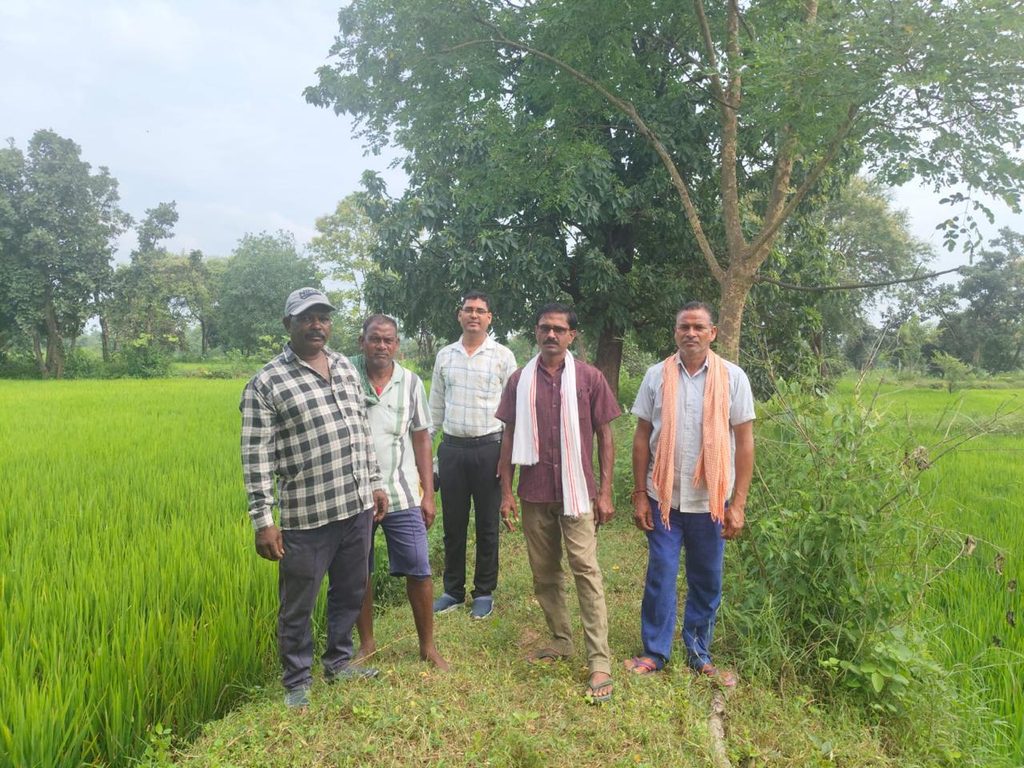
Soybean Crop Also Requires Close Monitoring
Soybean is currently at the pod formation and grain development stage. Due to continued moisture, farmers have been advised to monitor for stem fly, girdle beetle, leaf-eating caterpillars, tobacco caterpillar and whitefly.
Farmers should also watch for symptoms of rust, leaf spot and anthracnose. Yellow-brown spots on leaves, leaf shedding or other abnormal symptoms should be examined for proper disease identification before applying the recommended fungicide.
Mancozeb 75% WP at 1.5–2 kg per hectare may be used for relevant diseases as recommended.
If yellow mosaic symptoms appear, affected plants should be uprooted and destroyed, while special attention should be given to controlling whitefly.
Advisory for Pigeon Pea, Urad and Moong
Pigeon pea is currently at the branch development and early flowering stage. Farmers have been advised to monitor pod borer, leaf-eating caterpillars and sucking pests.
The Agriculture Department has also advised farmers to install bird perches in fields and use pheromone traps. If pest infestation increases, registered and recommended insecticides should be used in the prescribed quantity.
Urad and moong crops are at the flowering and pod formation stage. Farmers should monitor pod borer, tobacco caterpillar, whitefly, aphids and thrips, besides watching for symptoms of yellow mosaic and leaf spot disease.
Plants affected by yellow mosaic should be removed from the field and destroyed, with special attention to whitefly control.
Cotton Farmers Advised to Monitor Pink Bollworm
Cotton is currently at the flowering and boll formation stage. Farmers have been advised to regularly monitor aphids, jassids, whitefly, thrips and pink bollworm.
For pink bollworm, farmers should install pheromone traps for monitoring and inspect flowers and bolls by opening them to check for the presence of larvae.
Recommended insecticides should be used only after confirming infestation.
Agriculture Department Advises Use of Biological Measures
Farmers may also adopt biological control measures during the early stages of infestation.
The advisory includes the use of Trichoderma viride, Pseudomonas fluorescens, Beauveria bassiana, Metarhizium anisopliae, Bacillus thuringiensis (Bt) and neem-based products or azadirachtin, strictly according to the quantity and method specified on the respective product labels.
ALSO READ-
- Preventive Action Taken Against Four Men for Disturbing Public Peace in Rajnandgaon
- Raipur Division Clinches Overall Championship at 26th State-Level School Sports Competition
- Collector Directs Foolproof Arrangements for Devotees During Kwar Navratri Fair in Dongargarh
- Rajnandgaon Police Maintain Tight Vigil During Ganesh Immersion Tableau
- PM AASHA Scheme Helps Rajnandgaon Farmer Komal Kumar Sahu Earn ₹52,000 More from Chickpea Sale
Farmers Advised to Follow Safety Measures During Spraying
The Agriculture Department has advised farmers not to spray pesticides during rainfall. Spraying should be carried out only after the rain stops and the leaves have dried.
Farmers have also been advised:
- Not to use pesticides unnecessarily without identifying the pest or disease.
- Not to mix different insecticides and fungicides without recommendation.
- During the current grain-filling stage of paddy, to check the pre-harvest waiting period before applying any pesticide.
- To prevent waterlogging in fields and arrange drainage wherever necessary.
- To avoid excessive use of urea and other nitrogen-based fertilisers.
- To use pesticides according to their active ingredient, concentration and registered crop use.
- To wear a mask, gloves and protective clothing while spraying pesticides.
Farmers Advised to Seek Expert Guidance
The Agriculture Department has urged farmers to regularly inspect their crops following the continuous rainfall.
If symptoms of pests or diseases are observed, farmers should contact the concerned Rural Agricultural Extension Officer, Agriculture Officer or Krishi Vigyan Kendra for proper identification and recommendation before using any pesticide.
The department has particularly advised farmers to identify early symptoms of brown planthopper, panicle mite, blast and brown spot in paddy, along with pest and disease symptoms in other crops, and take timely control measures.