

Development reaches Particularly Vulnerable Tribal Groups with pucca houses, roads, electricity, drinking water and healthcare; 24,218 houses completed and 1,833 km of roads constructed
Published on: November 14, 2026
By: Dhananjay Rathore
Joint Director, Public Relations, Raipur
Location: Raipur, India
Chhattisgarh’s remote forest regions are witnessing significant changes as the state government advances its policy of development, trust and security. Improved infrastructure and greater public participation in development works are helping connect previously isolated areas with the mainstream, bringing better access to healthcare, roads, education, drinking water and electricity.
The transformation is particularly visible in villages inhabited by Particularly Vulnerable Tribal Groups (PVTGs), where the Pradhan Mantri Janjati Adivasi Nyaya Maha Abhiyaan (PM-JANMAN) is being implemented on priority.
The initiative aims to improve the socio-economic conditions of the country’s most vulnerable tribal communities and ensure access to essential services, including housing, clean drinking water, education, healthcare, nutrition, road connectivity, electricity, telecommunications and sustainable livelihood opportunities.
Direct Government Outreach After Decades of Neglect
For residents of remote forest villages, pucca houses, all-weather roads, electricity and accessible healthcare were once distant aspirations. Reaching a hospital often meant walking several kilometres, while access to clean drinking water and quality education remained limited.
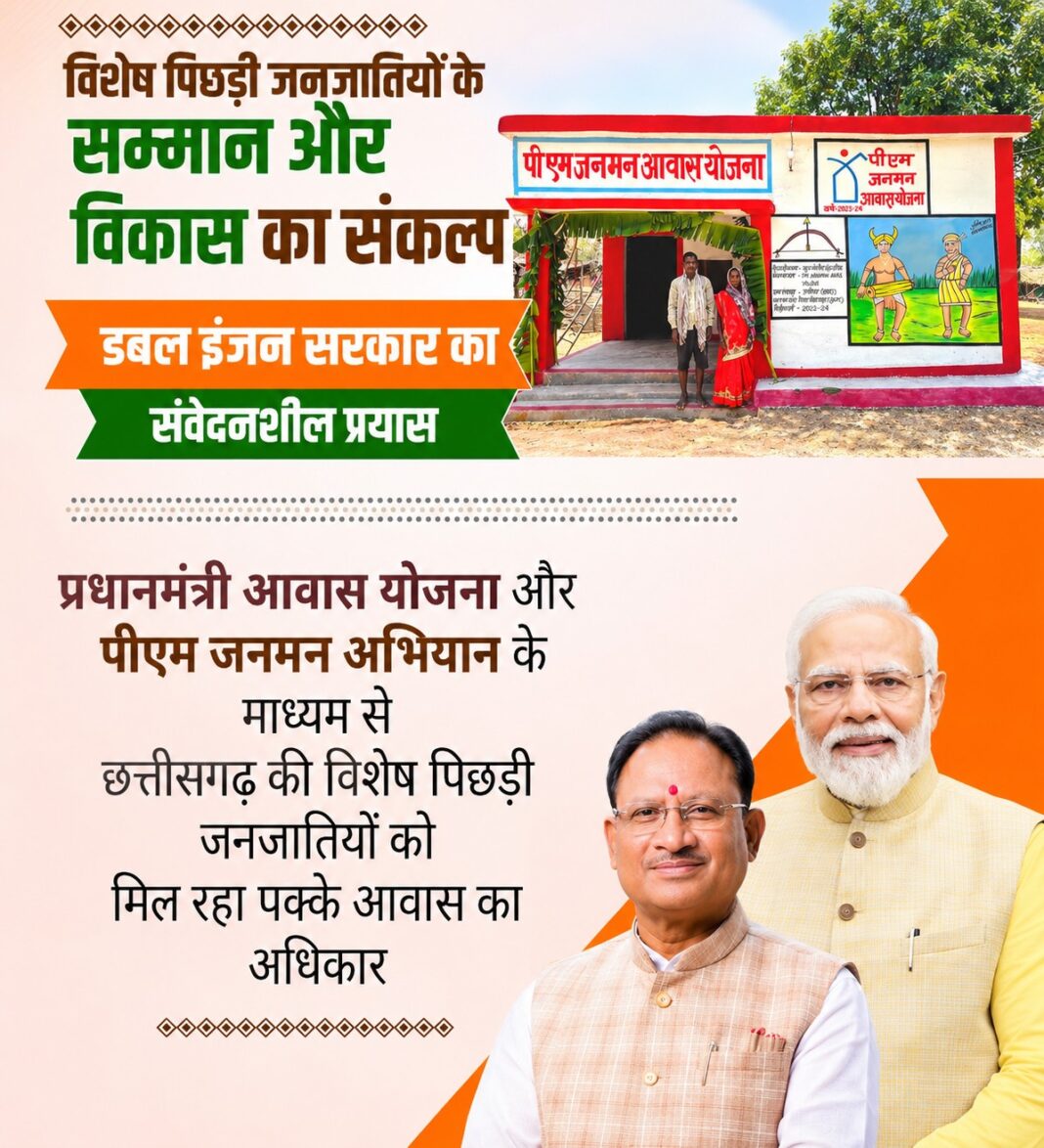
The PM-JANMAN initiative is now bringing government services and welfare schemes closer to these communities. In Chhattisgarh, special attention is being given to eligible beneficiaries belonging to the Baiga, Pahadi Korwa, Birhor, Kamar and Abujhmadia communities.
The initiative was launched by Prime Minister Narendra Modi in November 2023. Under the leadership of Chief Minister Vishnu Deo Sai, the state government is implementing the programme with a focus on reaching remote tribal settlements.
The article states that President Droupadi Murmu honoured Chhattisgarh with the first prize for its outstanding performance in implementing the initiative.
The assessment of these developments is particularly significant ahead of Janjatiya Gaurav Divas, observed on November 15.
Pucca Houses and Roads Strengthen Connectivity
Housing and road infrastructure have emerged as major areas of progress under the scheme.
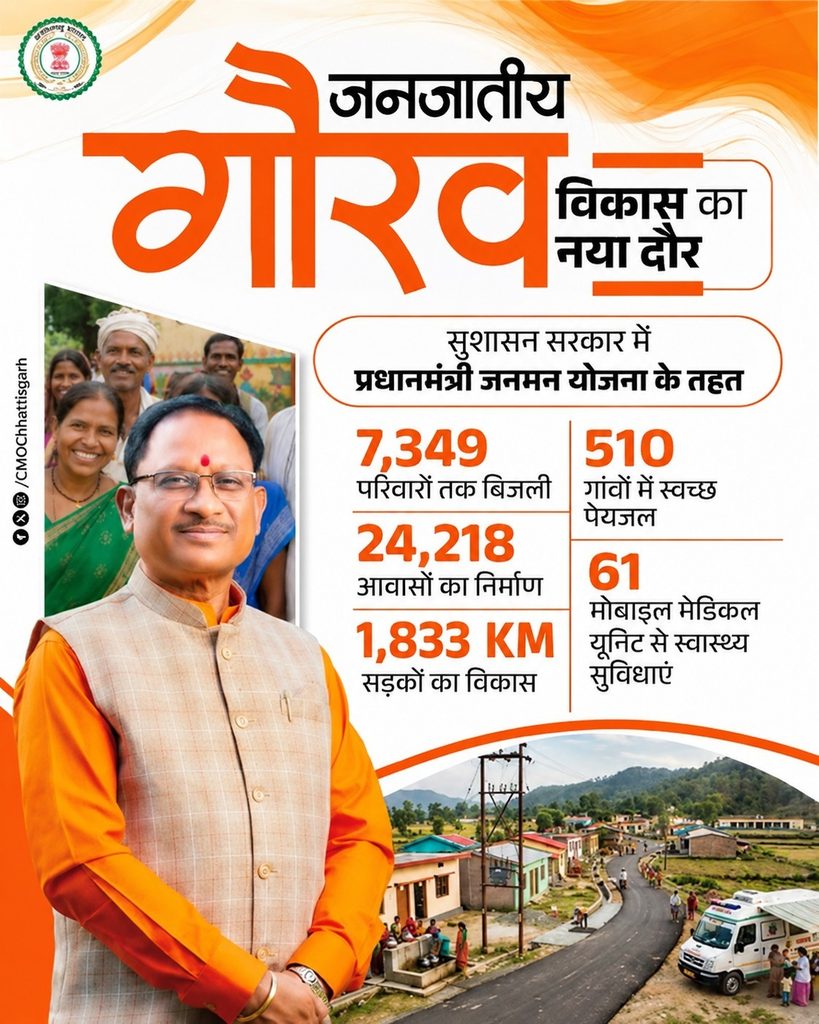
In Chhattisgarh, 34,691 pucca houses were sanctioned for families belonging to Particularly Vulnerable Tribal Groups. Of these, 24,218 houses, approximately 69 per cent, have been completed, providing secure homes to families who previously lived in temporary or hut-like structures.
To improve connectivity between villages, main roads and markets, 2,901 kilometres of roads were sanctioned. Construction of 1,833 kilometres has been completed.
Improved road connectivity is making access to education, healthcare and livelihood opportunities easier for residents of remote settlements. Skill development initiatives are also creating new employment and self-employment opportunities for tribal youth.
Electricity and Drinking Water Reach Remote Settlements
The government is extending electricity access to remote tribal habitations through solar energy and on-grid connections. Under the programme, 7,349 households have achieved 100 per cent off-grid electrification.
Similarly, drinking water infrastructure is being expanded through the Jal Jeevan Mission. Out of 1,490 targeted villages, 940 have achieved complete coverage in the specified development indicators. In the drinking water category, 510 out of 1,425 villages have achieved 100 per cent coverage.
These interventions are aimed at reducing the difficulties faced by families who previously had to travel long distances to collect water or depend on untreated sources.
Healthcare and Nutrition Services Expanded
Healthcare and nutrition support are also important components of the initiative.
Special campaigns are being conducted for screening and prevention of sickle cell disease among Particularly Vulnerable Tribal Groups. Iron and folic acid supplements are being provided to people across different age groups and pregnant women to address anaemia.
The programme also focuses on regular health check-ups for children, proper care for pregnant and lactating women, supplementary nutrition and awareness about balanced diets. Families are being encouraged to develop nutrition gardens and adopt healthier food practices.
To provide medical services in inaccessible areas, 61 Mobile Medical Units (MMUs) are operational. These units visit remote settlements and provide healthcare services and medicines.
Additionally, all 191 sanctioned Anganwadi centres are currently functioning, strengthening the delivery of nutrition and maternal and child welfare services.
Livelihood Opportunities and Digital Connectivity
The PM-JANMAN initiative is also working to strengthen traditional livelihoods by connecting tribal communities with modern markets and digital services.
Many families depend on agriculture and minor forest produce such as honey, mahua, tendu leaves and medicinal herbs. The government is promoting value addition, entrepreneurship and better market access to improve their income opportunities.
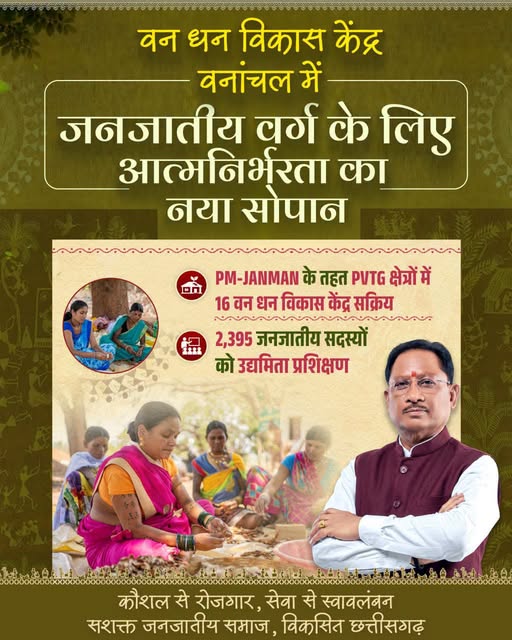
Under the initiative, 16 Van Dhan Vikas Kendras have been established to encourage livelihood activities based on local resources.
Digital connectivity is another major focus. A total of 135 mobile tower sites have been sanctioned, of which work has begun at 37 sites. In addition, 51 multipurpose centres and 40 hostels are being developed.
Improved mobile and internet connectivity is expected to expand access to Digital India services, Direct Benefit Transfer, digital banking and emergency communication facilities. It can also help tribal artisans and forest produce collectors showcase value-added products in wider markets, including e-commerce platforms.
A New Direction for Inclusive Tribal Development
The PM-JANMAN initiative is not limited to constructing houses and roads. It seeks to connect vulnerable tribal communities with essential services, livelihood opportunities and the wider development process.
On the occasion of Janjatiya Gaurav Divas, the progress reported under the scheme highlights the ongoing efforts to improve living conditions in Chhattisgarh’s remote tribal settlements.
Chief Minister Vishnu Deo Sai said that Chhattisgarh has emerged as the country’s number one state in the effective implementation of PM-JANMAN. He said that bringing smiles to the faces of Particularly Vulnerable Tribal Groups is the real achievement of good governance.
With improved access to electricity, drinking water, roads and healthcare, the state’s tribal communities are moving towards new opportunities for development and a more secure future.
ALSO READ-
- Rajgamai Estate Trust Approves ₹11 Lakh for Rani Suryamukhi Devi Statue in Rajnandgaon
- Rajnandgaon Gets ₹1.50 Crore Approval for Construction of Five Mahtari Sadan Buildings
- Bulldozers Move In to Reclaim 43-Year-Old Lease Land Worth Over ₹100 Crore in Rajnandgaon
- Bhagwan Birsa Munda: The Eternal Legacy of ‘Dharti Aaba’, Guardian of Tribal Identity and Culture
- Chhattisgarh Showcases Cultural Heritage, Local Products and Startup Innovations at India International Trade Fair